The short version
Dealing with bathroom water damage in Acton, CA? Close the fixture valve, cut power to the wet area, clear out the cabinet and take photos. A plumber repairs the source and a restoration team handles the water, ideally inside 24 to 48 hours.
How do I stop a bathroom or kitchen leak at the source?
Close the valve that feeds the leaking fixture, then dry what got wet. Bathroom water damage in Acton, CA often hides inside cabinets, walls and floors, so the goal in the first hour is to stop the supply and keep the water from traveling any farther.
- Turn the fixture stop clockwise. It is the small valve under a sink or on the wall behind a toilet. If it will not move, close the main valve for the house, as described on the burst pipe page.
- Turn off the circuits serving the wet room from a dry spot at the panel, never from standing water.
- Pull everything out of the cabinet so air reaches its floor and wet items stop soaking.
- Take pictures of the leak and the damage before cleanup starts.
- Mop up puddles with towels or a wet vacuum, then aim a fan at the area.
- Plan on two helpers: a plumber to fix the leak and a restoration team to dry the building.
Restoration teams differ on what they handle, so ask whether one dries cabinets and opens floors or leaves the rebuild to a contractor. For the bigger picture, see water damage repair in Acton.
What is leaking under my sink, tub or toilet, and who repairs it?
Every fixture has its own failure pattern, and fixing it is normally a plumber's work. The table pairs the usual suspects with the clue each leaves and the valve to close. Cleaning up the water afterward belongs to a restoration team.
| Fixture | Clue you may notice | What to shut off | Who repairs it |
|---|---|---|---|
| Shower pan or tile base | Spongy flooring beside the shower, cracked grout, or a stain on the ceiling underneath | Stay out of the shower until repaired | Plumber or tile contractor |
| Tub overflow or drain | Wet flooring or a ceiling stain below while the tub is running | Turn off the tap and let the tub drain | Plumber |
| Toilet wax ring or supply | Dampness around the base, or a bowl that wobbles | Valve on the wall behind the bowl | Plumber |
| Sink supply line | A cabinet floor that has swollen, or droplets on the valve | Stop valve under the sink | Plumber |
| Drain trap or tailpiece | Drips only while the sink empties | Stop using the sink | Plumber |
| Faucet body | Moisture pooling at the base or the handle | Stop valves under the sink | Plumber |
| Garbage disposal | Water around the housing and a sour odor in the cabinet | Stop running the unit | Plumber or installer |
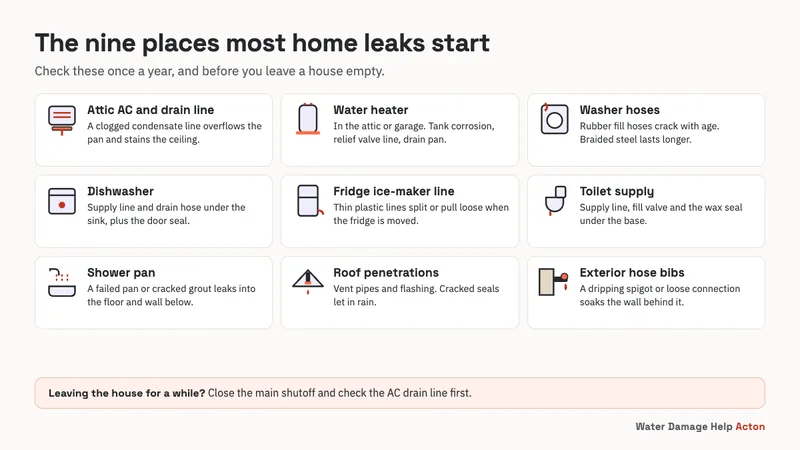
Dishwashers, refrigerator lines and washers are covered separately under appliance leak water damage, and tanks have their own page at water heater leaks.
Can a shower leak hurt what I cannot see?
Yes. A shower that leaks behind tile soaks the wall cavity and the floor under it long before a stain appears. Visible signs include loose or cracked tile, grout that keeps crumbling, paint that blisters and a floor that feels soft outside the shower.
Check the room below, if there is one, and look for a ceiling stain under the bathroom. Tile and grout can hide a slow leak for a long time, because the water goes where you cannot see it.
- Press on the floor beside the tub or shower for a soft or bouncy spot.
- Look for rust on screws, nails or metal edges near the wall.
- Notice a musty smell that returns after you clean.
- Watch the water meter with every fixture off, as EPA WaterSense suggests, to see whether it keeps moving.
A moisture meter in a provider's hands can map how far the water went without tearing out tile. The guide to signs of water damage and the page on water damage smell help with the clues you can check yourself.
Do I have to replace cabinets after a leak?
Not always. Solid surfaces can often be cleaned and dried, while swollen particleboard and cabinet bases that stayed wet usually cannot be saved. Under EPA guidance, porous or absorbent materials that turn moldy may need to be discarded, since mold works into their crevices.
For hard surfaces that did not soak through, the EPA advises scrubbing off mold with detergent and water and drying completely. It says not to paint or caulk a moldy surface. The sooner the cabinet is emptied, opened and dried, the better its chances.
Ask whoever inspects the damage to show you where the moisture readings are still high. Cabinet bases touching a wet floor can wick water upward, and the back panels against a wall often stay damp the longest.
Will the floor underneath a leak need to come out?
Sometimes. Vinyl, tile and laminate can trap water against the subfloor, which then stays wet for longer than the surface suggests. If the boards under a tub, vanity or sink are soft, stained or rotted, they need to be opened up and replaced, not just dried.
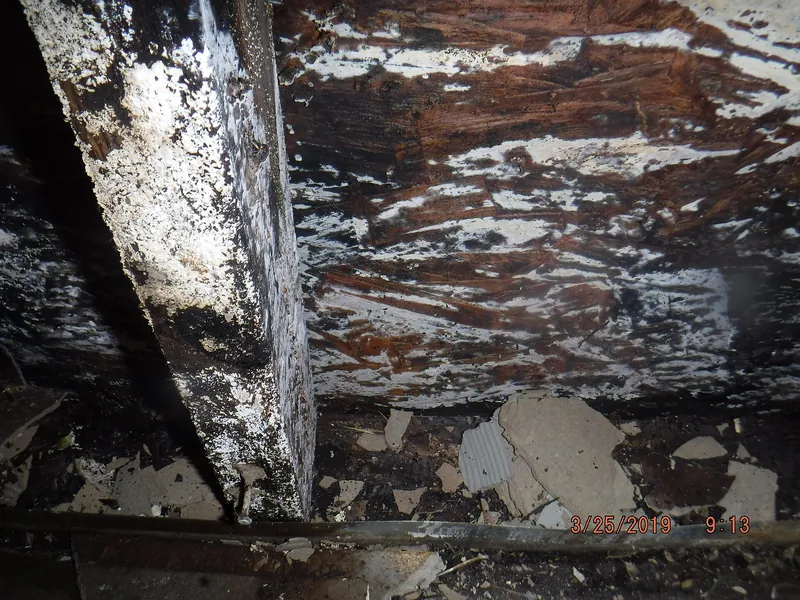

A leak that runs for weeks is a different problem from a burst supply line that was caught in an hour. Tell the provider how long you think the leak ran, since long-term moisture changes what has to be removed. The water-damaged floor repair guide explains how floors are assessed, and wet carpet drying covers rooms next door.
Can high water pressure cause fixture leaks?
It can wear out hoses, valves and seals faster. The Department of Energy's Building America guidance says higher pressure can damage fixtures, and that holding pressure at or below 60 psi reduces leaks in faucets, water heaters and hoses.
The City of Tustin says that plumbing codes call for a pressure reducing valve when static pressure goes above 80 psi, and that most plumbing professionals suggest a setting between 35 and 60 psi. Tustin is a different water system, so treat these as reference figures.
A plumber can test the pressure at a hose bib. If a house has a reducing valve, it may only need adjustment.
Is the water from a bathroom or kitchen leak clean or dirty?
It depends on the source, and the IICRC S500 standard uses three categories. A supply line leak is Category 1, clean water, washers, dishwashers and toilet overflows without waste make Category 2, gray water, and sewage is Category 3, grossly contaminated.
A supply-line leak starts clean, but water that sits in cabinets or soaks carpet pads can degrade. A toilet that overflows with waste, or a sewer line that backs up into a tub, is a contamination problem. The EPA recommends bringing in a professional who has handled buildings damaged by contaminated water.
The restoration team you reach confirms the category on site, and that decides which materials can stay. For a drain that backs up, read sewage backup cleanup.
Does insurance pay for a bathroom or kitchen leak in California?
Often, when the leak is sudden and accidental. Triple-I reports that typical forms list accidental discharge or overflow from plumbing and appliances as covered causes, and NAIC says plumbing leak damage is typically covered. Slow leaks and poor upkeep are treated differently.
- Triple-I notes that damage from poor upkeep is excluded, so a drip ignored for months may be refused.
- NAIC says homeowners policies often exclude mold costs, while the state insurance department says mold from a covered peril may be covered.
- Triple-I's statistics put water damage or freezing claims at roughly one in 60 insured homes a year, at an average of $15,400 per claim for 2019 to 2023.
- The state says to report water damage immediately and to stop the leak at the source.
Triple-I also reports that this category was 22.6 percent of homeowners losses in 2023. The insurance claims guide walks through reporting and documenting a loss.
Can mold grow behind a shower or under a sink?
Yes, and it often grows where no one looks. The EPA says mold can sit inside walls around leaking pipes and behind furniture, and that wet materials dried within 24 to 48 hours usually do not grow it. Damp cabinets and tile walls that stay wet are the usual places.
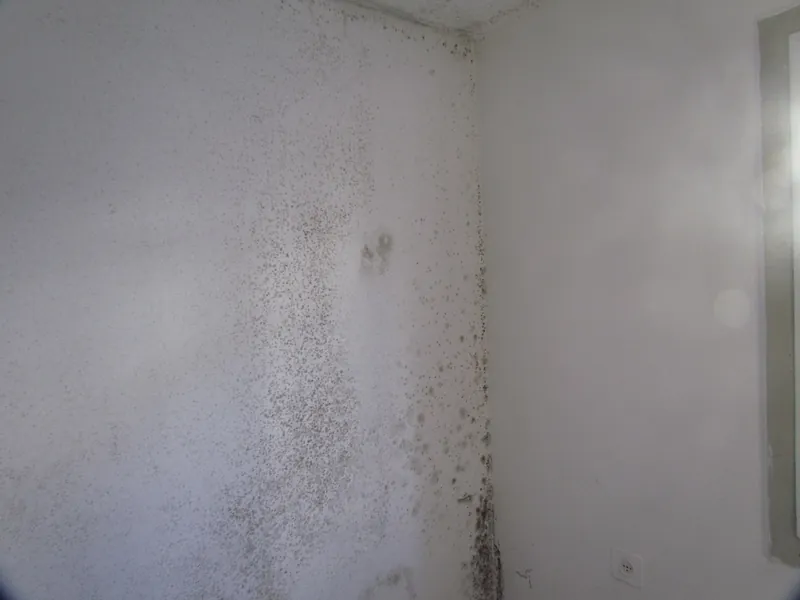

The EPA says homeowners can in most cases handle a moldy area of less than about 10 square feet themselves, and that indoor humidity should stay below 60 percent, ideally 30 to 50 percent. Run the bathroom fan during showers and for a while after. Use exhaust fans when cooking or running the dishwasher.
Exposure to mold can irritate the nose, throat, eyes and skin, according to the CDC, and people with asthma or a mold allergy can have stronger reactions. Read mold after water damage before you scrub or demolish.
What if I rent and a leak starts in the bathroom or kitchen?
Tell your landlord in writing and keep a copy. California Civil Code 1941.1 lists effective waterproofing and plumbing in good working order among the features a rental home must have, and Health and Safety Code 17920.3 treats dampness of habitable rooms and visible mold as substandard conditions.
The 2020 census found that 12.0 percent of occupied homes in Acton are renter-occupied. The California Department of Public Health says that if you control dampness, you control mold, so report water problems early and photograph them. The renters and landlords guide explains who handles what.
What do published estimates say about repair costs?
National figures give a rough sense of scale, not a quote. Fixr lists drywall restoration at $1.50 to $3 per square foot, and Bob Vila gives the same range for drywall repair, with ceiling repair at $350 to $1,250 and floors at $200 to $500 to restore.
Fixr also lists ranges by damage class, running from $150 to $400 at the low end to $1,000 to $3,000 at the top. Real prices depend on the size of the area, the water category and what has to be rebuilt. Providers set their own prices, so confirm each one directly before you agree.
Get written bids that itemize materials and labor, and see the restoration cost guide for more figures. If a ceiling below the bathroom is wet, see ceiling water damage repair, and for plaster or drywall walls read drywall water damage repair. Statewide background is on the California water damage site.
Sources: EPA mold cleanup; EPA moisture guide; IICRC S500; Triple-I on covered disasters; Triple-I homeowners and renters statistics; NAIC consumer page; CDI claims guide; Building America, service water pressure; Tustin, high water pressure; CDC on mold; CDPH renters booklet; Fixr, restoration cost; Bob Vila, restoration cost; Acton on Wikipedia.