The short version
For appliance leak water damage in Acton, shut the machine valve or the main first, flip the breaker if water is near outlets, and take photos. A plumber or repair company fixes the unit and a restoration team handles the water. Drying wet materials within 24 to 48 hours helps prevent mold.
What should I do in the first minutes of a household appliance leak?
Cut the water supply to the machine, keep yourself out of harm's way, and document the scene. Leaks from appliances tend to seep under floors and behind cabinet faces with little noise, so early action limits how far the water travels. Later you will likely need two different callers: someone for the unit and someone for the water.
- Turn the machine's shutoff. Most washers, dishwashers, toilets and ice makers have a small valve on their feed line. If it is stuck, go to the main house valve.
- Flip the breaker when water is near plugs or cords, as long as getting to the panel does not mean wading.
- Film the damage: the machine, the trail of water and every wet surface, before anything is shifted.
- Pick up rugs, cartons and shoes from wet flooring, and mop standing water with towels.
- Book a plumber or repair company for the equipment and a restoration team for the wet structure.
Removing water and drying the framing is restoration work, described on the page about water removal in Acton. Restoration teams differ, so ask each one what it actually handles.
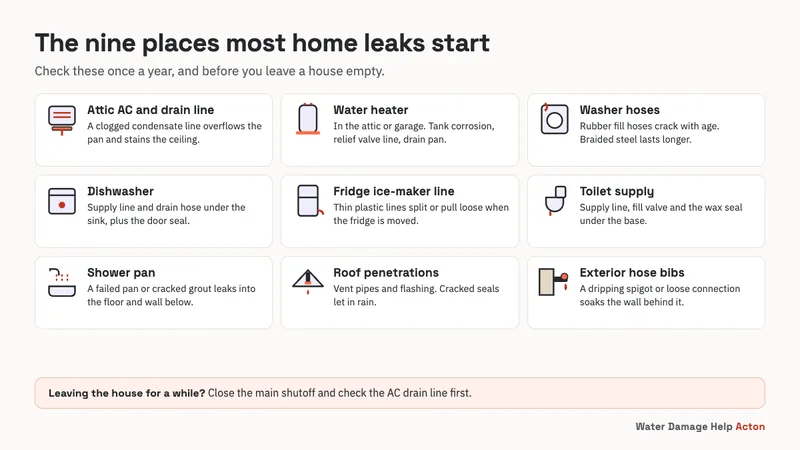
Where does each appliance tend to fail, and what water does it release?
Each machine fails in its own way and releases its own grade of water. The grade matters because it steers what happens to wet materials. The IICRC's S500 standard calls a broken supply line Category 1, clean water, and discharge from a washer or dishwasher Category 2, grey water.
| Appliance | Frequent trouble spots | First move | Water grade |
|---|---|---|---|
| Water heater | Tank shell, drain valve, pipe fittings, relief pipe | Close the cold inlet, then cut fuel or power | Category 1 from supply |
| Clothes washer | Fill hoses, drain hose, pump, standpipe spill | Close both wall valves | 1 from a hose, 2 from drain water |
| Dishwasher | Door gasket, feed and drain hoses | Close the valve in the sink cabinet | 1 from feed, 2 from drain water |
| Refrigerator | Ice maker tube and its joints | Close the little valve on that tube | Category 1 from supply |
| Toilet | Supply line, fill valve, tank, base seal | Close the wall valve behind the bowl | 1 from supply, 2 from clean overflow |
Once waste gets into the water it becomes Category 3, which the sewage backup page explains.
Does a failing water heater count as an emergency?
A split tank is an emergency, a weeping fitting is urgent, and a damp relief pipe needs a plumber to work out why. Heaters tucked into a garage, closet or utility nook can soak walls and flooring before anyone notices, since few people look at them regularly.
- Water through the tank shell: the tank is finished. Close the cold inlet, then shut off gas or power.
- A dripping joint or drain valve: close the inlet and phone a plumber, because joints can often be fixed.
- Discharge from the relief pipe: do not plug it. It exists for safety.
California adds an earthquake rule. Health and Safety Code 19211 requires residential water heaters to be braced, anchored or strapped so a quake does not topple or shove them, and a seller must certify compliance in writing. A heater that shifts can rip its own plumbing loose, a topic covered on the water heater leak page.
Why do clothes washers flood a room?
Usually a hose lets go, the pump fails or the standpipe clogs. A split fill hose pours until someone closes the wall valves, and a clogged standpipe can overflow at its top. Either way, a laundry area can fill faster than most people would guess.
Closing both wall valves before a long trip removes the worst scenario. Water from a washer's drain side is treated as Category 2, and it runs under the machine and along the baseboards.
Laundry space above another room can drip through the ceiling below. Lift the washer's feet clear of wet flooring if needed, but never drag a loaded machine across it.
What does a leaking dishwasher do under the counter?
Water heads down, not out. It gathers beneath the machine and soaks the cabinet base and the subfloor under it, frequently well before a puddle shows on the kitchen floor. A slow drip can continue for weeks without anyone seeing a thing.
Inspect the door seal, the feed line and the drain hose under the sink. Pull off the kick plate and look for dark marks, soft wood or a cabinet floor that has swollen.
Because that flooring cannot be dried from above, a provider takes readings in the cabinet bases and subfloor and says what can dry in place. Fix the dishwasher first, or the water simply returns.
How can a fridge water line leak go unnoticed?
It hides behind the appliance. A slim tube feeds the ice maker and dispenser, and a pinhole or loose joint can drip into the wall or floor for weeks. The first hint is often a lifted plank or a baseboard that has gone soft.
- Shut the little valve on the tube and turn the ice maker off.
- Ease the fridge forward and check the floor and wall base.
- Look along both sides, not only the front edge.
Water from a supply tube starts clean, but water trapped in building materials can pick up contamination as time passes. Drying quickly beats waiting, as the water damaged floor repair page shows.
What clues point to a leak I cannot see?
Study the materials around the appliance, not only the floor. Puffy cabinet bottoms, cupped boards, a musty smell and marks near a machine all suggest slow moisture. With hidden leaks, the surroundings often show harm before any water appears, so the clues below are worth learning.
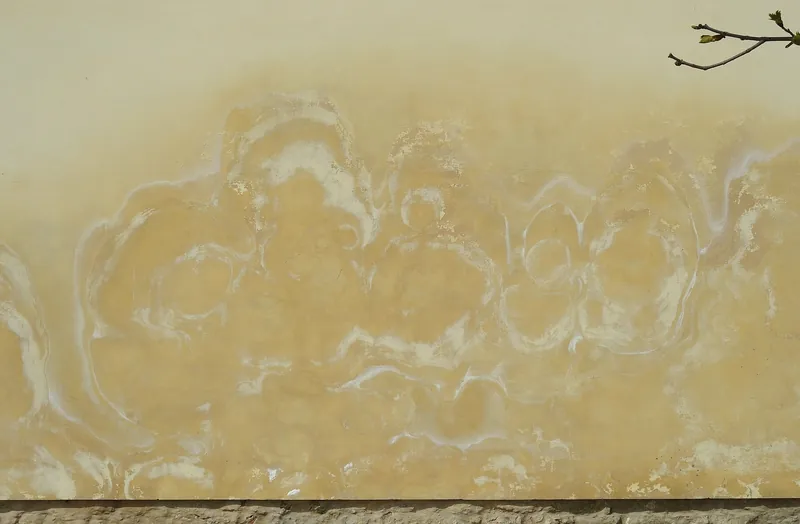

- Swollen cabinet bases beside a dishwasher or under a sink.
- Cupped or lifting boards near the kitchen or laundry.
- A stale odor that returns after cleaning.
- Flaking paint or trim that has separated from the wall.
- A water bill that climbs while habits stay the same.
A moisture meter is the only way to confirm what eyes miss. The EPA says wet areas and belongings should be dried inside 24 to 48 hours to stop mold. The signs of water damage guide has more.
Are leak sensors and auto shutoff valves worth installing?
They are worth it where you put them and as long as you maintain them. A sensor on the floor next to the heater, washer, dishwasher or fridge reports a leak while it is small, and a motorized valve can close the supply when a sensor trips.
- Sensors go where water would land first. Some beep, and some message your phone.
- Motorized valves shut the supply. A plumber can say which type suits your pipes.
- Batteries and Wi-Fi need regular checks, because a dead unit protects nothing.
Neither device replaces a look at hoses and joints for bulges, rust and drips. The prevention guide lists further habits.
Does California homeowners insurance pay for a sudden appliance leak?
Frequently, if the leak was abrupt. Triple-I explains that standard policies list accidental discharge or overflow from plumbing, heating, cooling systems or a household appliance among covered perils. Your policy text decides, so read it closely or call your agent and ask before you count on a payment.
Wear and neglect are excluded, Triple-I adds, so a hose that cracked slowly over months invites a dispute. The NAIC says damage from home plumbing is typically covered while ground water and runoff are not.
- California's Department of Insurance asks that water damage claims be reported immediately.
- 10 CCR 2695.5(e) gives an insurer 15 calendar days to acknowledge a claim and start looking into it.
- If a plumber takes out the failed part, keep it, plus the receipts and photos.
For perspective, the Insurance Information Institute puts the share of insured homes with a water damage or freezing claim at roughly one in 60 per year, with a $15,400 average over 2019 to 2023. See the insurance claims guide for the steps.
What is the right order of calls after an appliance leak?
Stop the water first, then call in this order: the repair person for the equipment, your insurer, and a restoration team for the wet structure. The order matters because drying a floor while a hose still drips only repeats the loss.
- Stop the supply at the appliance or the main valve.
- Phone your insurer early, before any permanent repair, and ask what documents it wants.
- Get the unit checked by a plumber or technician and keep their written note on the cause.
- Call a local restoration team to measure moisture and set up drying.
- Plan repairs only after readings are normal.
Choose carefully. The CSLB consumer guide says a down payment cannot exceed $1,000 or 10 percent of the contract price, whichever is less, and that you should pay only as work is completed. See choosing a restoration company for questions to ask any provider.
Repairs of the rooms themselves are covered on the water damage repair page.
What changes if I rent or live with older plumbing?
Renters should notify the landlord in writing the moment a leak starts. Wikipedia's 2020 Census figures put Acton at 12.0 percent renter-occupied homes. California's Civil Code 1941.1 counts plumbing in good working order as part of a habitable dwelling, which can matter for a tenant.
Whoever owns an appliance usually repairs it, and the lease should say who. Tenants should also photograph belongings and ask their own insurer what a renters policy includes. Do not assume the landlord's policy covers your things.
- Keep a copy of every message to the landlord.
- Ask for a repair date in writing.
- For gray plastic supply lines, read about polybutylene pipes.
The renters and landlords guide sets out duties and next steps.
What habits stop the next appliance leak before it starts?
Keep every shutoff reachable, place sensors where water collects and look over hoses on a calendar. These steps cost little next to a cleanup, and repeated small checks catch most failures while they are still minor and cheap to fix.
- Operate each shutoff yearly and clear whatever is piled in front of it.
- Look over hoses for bulges, rust and cracks, and ask a plumber about braided steel replacements.
- Set a catch pan beneath a heater that sits over finished space.
- Close the washer valves and the main before a long trip.
- Learn where the main shutoff is. The cost guide shows why a fast shutoff matters.
If water has already reached flooring or walls, water mitigation describes how drying is planned and measured.
Sources: CDI claims guide for residential property; 10 CCR 2695.5; IICRC S500 water categories; Triple-I on covered disasters; Insurance Information Institute statistics; NAIC homeowners page; Health and Safety Code 19211 text; EPA on moisture control; Wikipedia, Acton; CSLB contract guide.