The short version
A water damage smell in Acton, CA is usually earthy and stale, a sign that materials are still wet or mold has started. Fragrance only covers it. Find the source, stop the water and dry the area.
What does a water damage smell like in a house?
A water damage smell is usually stale, earthy and damp, like a wet towel left in a gym bag or an old cardboard box. It tends to be strongest in a closed room, a closet or a cabinet. The odor means something is holding moisture, even if you see nothing wet.
The smell can come from the water, from the materials it soaked, or from mold that began to grow on them. Carpet pad, drywall paper, insulation and wood framing all hold water and give off odor as they stay damp. Air fresheners hide the signal without removing the cause.
California's health department lists a mold odor next to stains, peeling paint, warped floors and damp materials in its renters' booklet on dampness and mold.
Which smell points to which problem?
Different odors suggest different sources, though none of them is proof. Use the table to form a first guess, then verify with your eyes, a moisture meter or a plumber. A smell that fits two rows is a reason to check both, not to pick one.
| Odor | Often linked to | Where to look | Next step |
|---|---|---|---|
| Earthy, like wet soil | Slow leak or lingering dampness | Under sinks, behind appliances, along exterior walls | Check for soft or stained material, then fix the source |
| Stale, like a damp towel | Wet carpet, pad or upholstery | Floors near doors, windows and water heaters | See wet carpet drying |
| Sour or fermented | Mold or bacteria on wet organic material | Cabinet bases, closet corners, drywall near a leak | Dry the area and read the mold page |
| Rotten egg or sewage | Drain or sewer problem, a dry trap, or backup | Floor drains, tub and sink traps, the lowest fixtures | Call a plumber, see sewage backup |
| Musty only when the cooling runs | Wet drain pan or damp ductwork | Air handler, vents, ceiling below the unit | Have an HVAC technician inspect the drain |
Is it mold or just dampness?
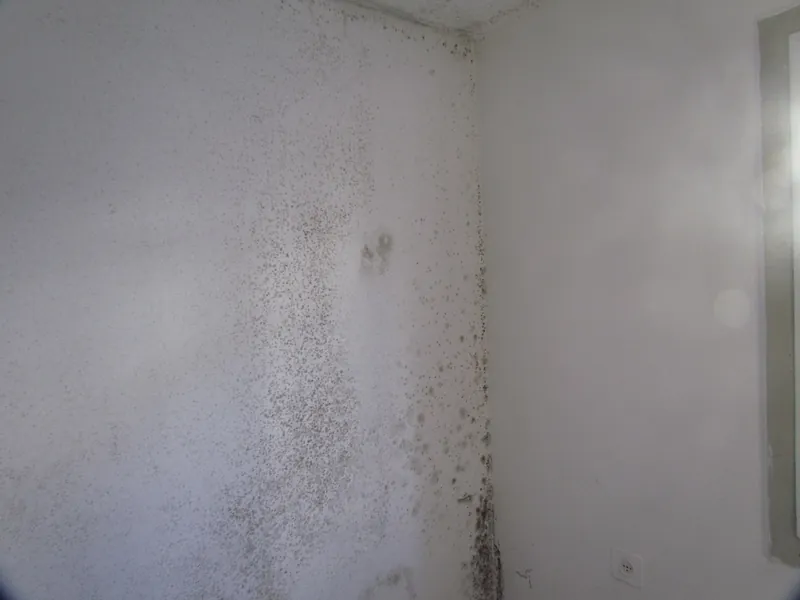
Dampness comes first and mold follows. A musty odor with no visible growth often means materials are wet and mold has not yet spread across the surface. A visible fuzzy or dark patch means growth has started, and the moisture behind it still needs fixing.
The EPA recommends drying water-damaged areas and items inside a 24 to 48 hour window to keep mold from starting. It also suggests holding indoor humidity below 60 percent, with 30 to 50 percent as the ideal range. A small meter at a hardware store measures this for roughly $10 to $50, according to the EPA.
The CDPH FAQ points out that California has no state licensing for mold assessors or remediators. That means you should ask any company what its work covers rather than assume a credential means something specific. See the mold versus mildew page for how to tell the two apart.
Can an air conditioner leak make the house smell?
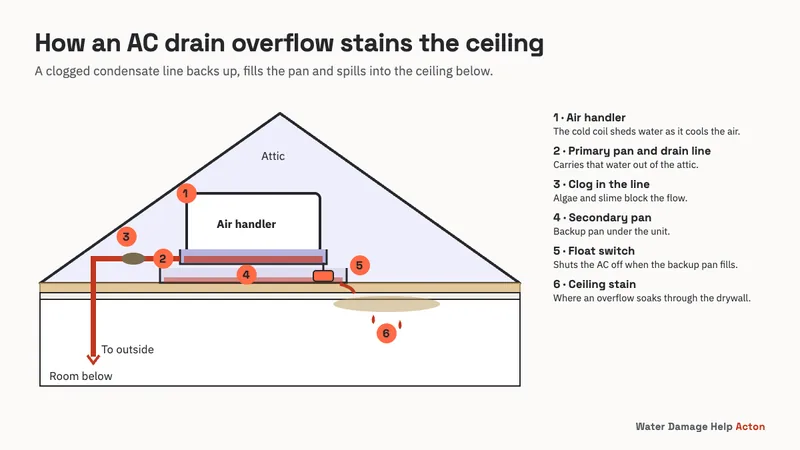
Yes. ENERGY STAR cautions that a plugged condensate drain can damage a house and raise indoor humidity. When the pan under an air handler fills and spills, insulation and drywall near it can stay damp and give off a musty odor every time the system runs.
A smell that appears only when the cooling is on is a strong clue. Check the ceiling below the unit for a stain, and look at whether the drain line drips outside. The air conditioner leak page lists what to check, and ENERGY STAR advises an annual check-up of the condensate drain.
Could a hidden pipe leak cause a musty smell?
It can. A slow leak inside a wall, under a floor or behind a cabinet keeps materials damp without showing a puddle. The first sign is often an odor near one spot, a faint stain, or a water meter that moves when every fixture is off.
If your home sits on a slab, a leak in a supply line beneath it can also dampen flooring from below. The slab leak page covers the warning signs. Not every home near Acton is built that way, so treat that as one possibility rather than the default.
The signs of water damage guide includes the meter test, which is the quickest way to learn whether water is escaping somewhere inside the plumbing.
Why doesn't masking the odor fix it?
Masking works on your nose, not on the moisture. Sprays, candles and plug-ins cover the scent for an hour while the wet material keeps feeding the smell, and the odor returns as soon as the fragrance fades. If mold has started, the problem continues quietly behind the fragrance.
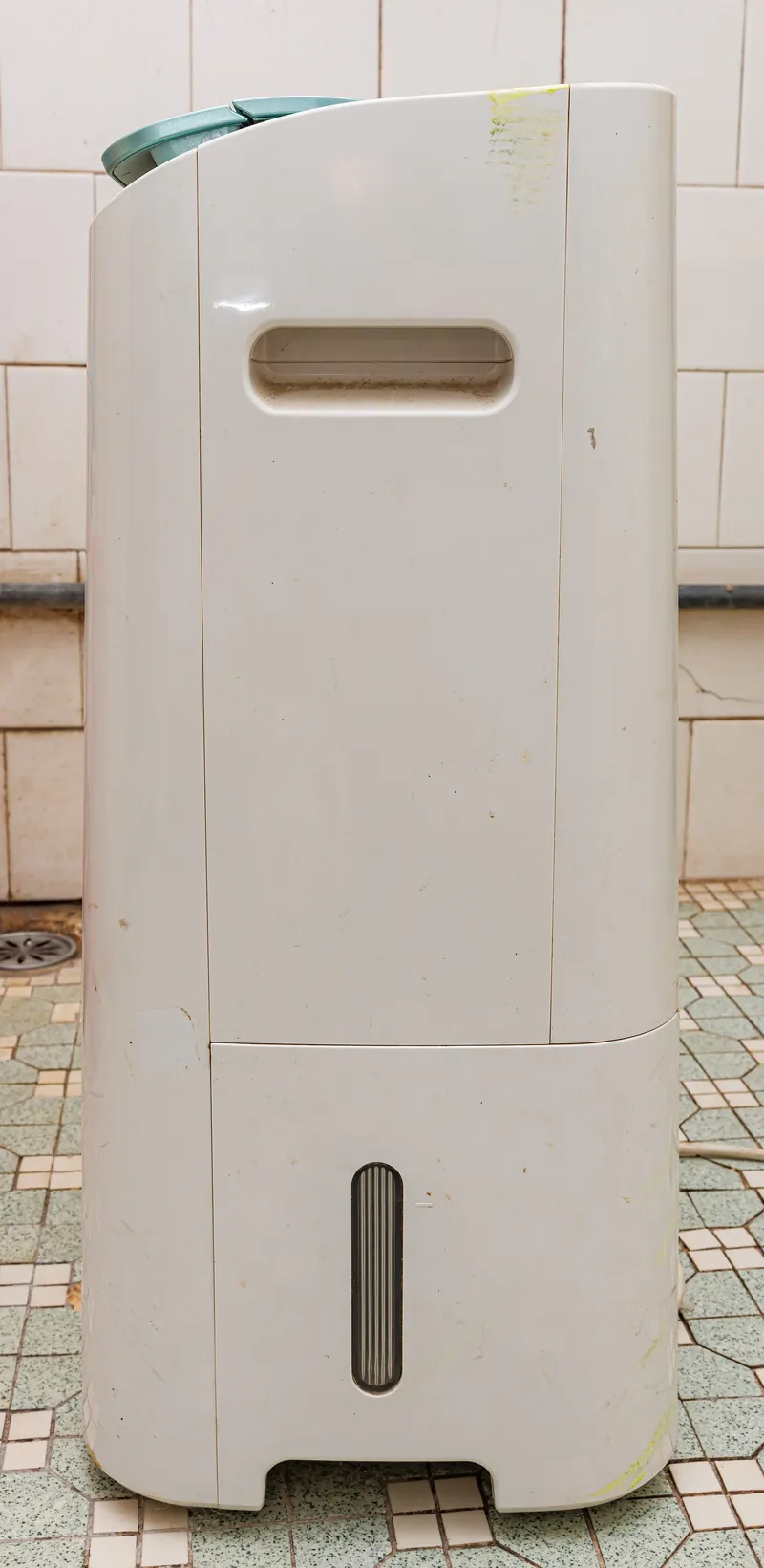
The EPA says not to paint or caulk moldy surfaces. Paint over a damp wall can trap moisture and blister again. Dry the source first, then deal with finishes. Dehumidifiers and fans help drying, though they do not replace finding and stopping the leak.

How do I find where the smell is coming from?
Narrow it down room by room and surface by surface. Smell is good at telling you that something is wrong and poor at telling you exactly where. Work from the strongest spot outward, and use touch and a flashlight, not just your nose.
- Walk the house after it has been closed for a while and note the room where the odor is strongest.
- Open and inspect cabinets, closets and the space behind the water heater and washer. Look for stains, soft spots and rust.
- Press on walls and baseboards near the strong spot. Soft or cool material is wet.
- Check the ceiling below any air handler or bathroom, and the floor beside any tank.
- Run the meter test described on the signs page to rule a hidden supply leak in or out.
- Ask for readings from a restoration team if you cannot find it. A moisture meter and a thermal camera can show wet areas behind a surface.
If you find standing water, stop the source first. The burst pipe page explains shutting off the supply.
Is a sewage smell dangerous?
Treat it as a contamination problem until a plumber says otherwise. In the IICRC S500 standard, sewage and rising flood water from rivers or outdoor surfaces fall into Category 3, grossly contaminated. EPA guidance is to hire a professional who has worked on buildings hit by contaminated water.
Stay out of the affected area, keep children and pets away, and avoid using the drains that back up. For flood cleanup the CDC suggests rubber boots, gloves and goggles, plus open windows. Never mix bleach with ammonia or other cleaners.
Coverage varies. Triple-I notes that sewer backups are not covered under a typical homeowners policy and need a separate endorsement. Read the sewer backup coverage page before you assume either way.
Why does the smell keep returning after I cleaned it?
A returning smell usually means moisture is still present somewhere you have not reached. Surface cleaning removes what you can see, while porous materials such as carpet pad, drywall and insulation keep holding water and odor until they dry or are removed.
- The source is still leaking, so the material rewets.
- Humidity stays high because the area has no airflow or the cooling system is not draining.
- Wet material was cleaned but not removed, and it is still damp underneath.
- A second area, such as the wall cavity behind a cabinet, was never opened.
Ask a provider to take readings before and after drying so you can see the numbers, not just rely on smell. Restoration teams differ on equipment and process, so confirm what the visit covers.
When should I get a restoration team involved?
Bring one in when materials are wet, when the area is larger than you can dry yourself, or when the water was contaminated. EPA notes that a moldy patch below roughly 10 square feet is usually something the occupant can tackle. Larger patches call for outside help.
Tell your insurer early. The state insurance department advises homeowners to locate and stop leaks at the source, and warns that slow cleanup can let mold take hold. Its residential property claims guide also says mold from a covered cause may be covered. See the claims page for the process.
To get help drying the area, use the contact page and ask for a local restoration team near Acton.
Sources: CDPH, Dampness and Mold for Renters; CDPH, Frequently Asked Questions about Mold; EPA, A Brief Guide to Mold, Moisture and Your Home; EPA, Mold Cleanup in Your Home; ENERGY STAR, Maintenance Checklist; IICRC, S500 standard; CDC, mold and health; Triple-I, coverage article; CDI, property claims guide