The short version
With commercial water damage in Acton, CA, close the source, check power, clear people and stock, film everything, then call your insurer and the building owner. Large commercial jobs are not for every provider, so check. Coverage comes from your policy, and flood is usually excluded.
What is the first thing to do when a shop or office takes on water?
Close the nearest shutoff valve. Everything else waits until the flow has stopped, because each extra minute puts more water into flooring, walls and stock. Commercial water damage in Acton, CA often happens in a small building where one person is on site, so keep the sequence short and written down.
- Water off. Use the valve at the leak or the main. A discharged fire sprinkler is different, since the firm that maintains the system normally has to close it.
- Power check. Ready.gov says wet electrical equipment must not be touched, and neither must any equipment while you stand in water. Switch power off only when that is safe, and call an electrician if the panel is wet.
- People before property. Steer staff and customers away from wet floors, then lift records, computers and stock off the ground where safe.
- Camera. Film the source, the soaked floor and the affected goods before anything is moved or thrown out.
- Phone calls. Reach your insurance agent right away. Triple-I advises postponing major permanent repairs until an adjuster has assessed the damage. Tell the landlord too, if you rent.
- Provider. Ask whether the company you reach handles commercial jobs of your size.
If a supply line caused it, burst pipe water damage describes the same early steps. For any building, emergency water damage restoration goes further.
Why is a business loss harder to manage than a house loss?
Water spreads the same way in both. What differs is the number of people with a stake, the money lost while doors are closed, and the equipment in the building. Those factors stretch the planning stage well past what a bedroom leak needs.
- Divided responsibility. Tenant, owner and manager can each hold a piece of the building and a separate insurer.
- Income. A day of lost sales may exceed the repair bill, so crews often work around opening hours.
- Entry. Evening jobs depend on keys, alarm codes and security being arranged in advance.
- Neighbors. Water slips into the next suite and down to the floor below.
- Sprinklers. A single discharge can release a large volume in minutes.
- Drying load. Wide floors take more machines, and the building may lack the circuits to run them.
Expect the first conversation to be about access, who is inside and how big the job is.
Which property types face which water problems?
Every kind of building has its own repeat offenders, and the origin of the water often decides who gets the first call. Treat the table as orientation, not prediction. A plumber, a building engineer or your insurer can speak to your specific property.
| Property | Frequent sources | Extra worry |
|---|---|---|
| Office | Roof-mounted air units, restrooms, supply lines | Computers, paper files, tenants below |
| Shop | Roof seams, entry runoff, AC drain lines | Bottom shelves, flooring, fixtures |
| Restaurant | Dish machines, ice makers, floor drains | Food safety, kitchen equipment, drain contamination |
| Church or school | Gutters, roof, restrooms, runoff | Big rooms, fixed meeting times |
| Apartment building | Unit plumbing, water heaters, appliances | Several households, shared walls and ceilings |
| Warehouse or barn | Roof leaks, door runoff, floor drains | Stacked stock, concrete floors, high ceilings |
Rental buildings fit several rows. The renters and landlords guide speaks to the housing side, and roof leak storm water damage deals with leaks from above.
What happens when a fire sprinkler goes off by accident?
A lot of water arrives quickly. Standard policy forms, says Triple-I, list accidental sprinkler discharge or overflow as a named peril, though the wording of your business policy controls. The company that services the system, not the restoration team, shuts it down and puts it back in service.
Once the supply is off, extraction and drying can start. Tell the insurer exactly how it happened, whether by accident, because of a fire or through a damaged pipe, since the cause shapes the claim. Fire damage is separate from the water work covered here.
Will a business insurance policy cover water damage in California?
It might. Commercial forms differ from homeowners forms, and the policy language is what counts. Read yours, or call your agent, before assuming anything about your building. Coverage, exclusions and your duties after a loss all vary from one policy to another.
Some patterns hold broadly. Triple-I says standard homeowners and renters policies exclude flood, and sewer backup is usually bought as an add-on. A February 2025 notice from California's insurance department says commercial and homeowners policies usually leave out flood, mudslide and debris flow, with an exception when a recent wildfire or other covered peril is the cause.
Ask about lost income during a closure and about stock. State claims rules give an insurer 15 calendar days to acknowledge a claim (section 2695.5) and 40 calendar days after proof of claim to decide (section 2695.7). The insurance claims guide is aimed at homes, yet photographing first and saving receipts applies to any property.
Who answers for the damage, the tenant or the landlord?
Check the lease and trace the source of the water. Responsibility is not assigned automatically: a tenant need not own a leak inside a wall, and a landlord need not cover a tenant's merchandise. Guessing here can cost real money, so read before you pay.
Send written notice to the owner or manager when you learn of the loss, and keep a copy. Then settle three points: who arranges drying of the structure, who handles contents, and which insurer sits behind each party. A manager with many units should keep one running record for all of them.
Lease questions belong with a lawyer. The residential rules in Civil Code 1941.1 apply to dwellings and say nothing about shops.
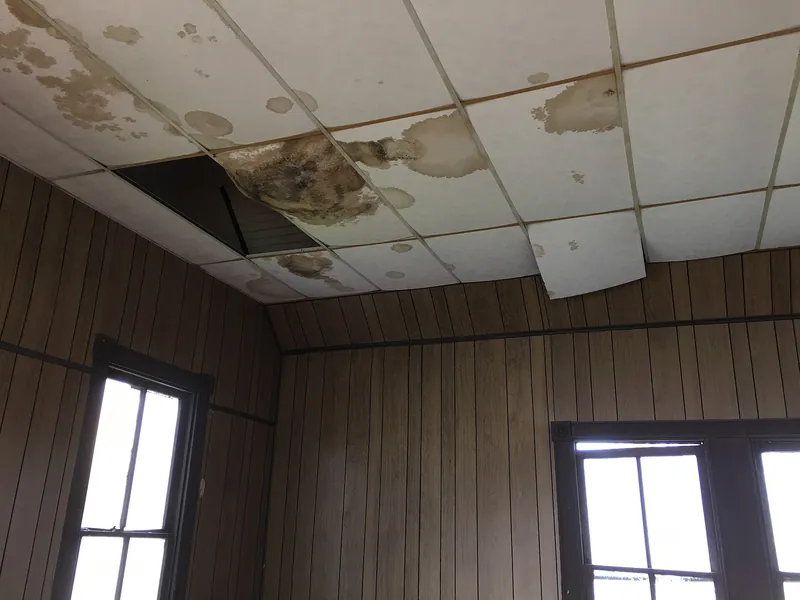

Can any restoration team take on a large commercial building?
No, so ask first. Some providers accept commercial work and others do not, with limits on size and on services. This site has no way to know ahead of time which team will take a particular building.
When you call, give the affected area, the kind of property and where the water came from. Ask about after-hours work and how it can run around people still in the space. If the answer is no, ask whom they would recommend.
Questions and red flags are gathered in the guide to choosing a restoration company. No promise is made here that any provider is free or does commercial work.
How do crews dry a large commercial space?
Same method as a home, bigger scale: stop the source, take out standing water, remove materials that cannot be saved, run dehumidifiers and air movers, and track progress with moisture readings. To avoid mold, the EPA calls for getting wet areas and items dry in the first 24 to 48 hours.
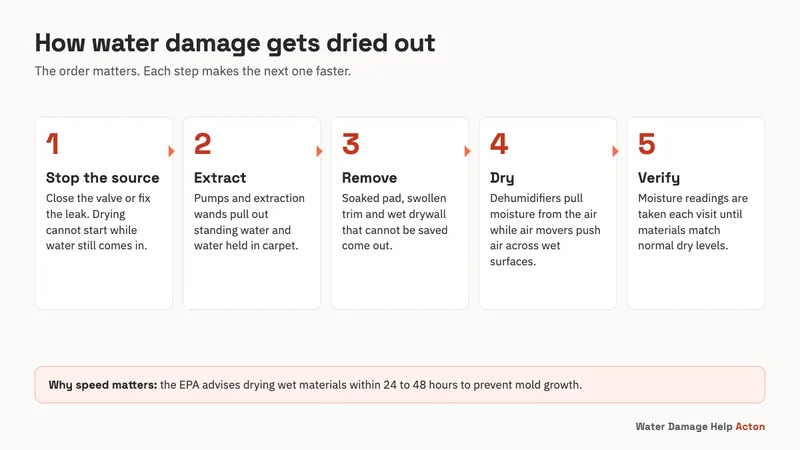
Humidity is the point of commercial dehumidification. The EPA says to hold indoor humidity under 60 percent, ideally between 30 and 50 percent. Concrete floors and masonry walls can keep moisture longer than they appear to, so ask for readings on every visit.
Structural drying explains how moisture is tracked, and water removal covers the first extraction steps.
What should a manager know about mold in a commercial building?
Slow drying invites mold, and larger buildings need a written plan. The EPA's guide for schools and commercial buildings sets the minimum gear for disturbing mold at an N-95 respirator, gloves and eye protection, and advises against running an HVAC system you know or suspect is contaminated.
For medium or large jobs the EPA suggests naming a remediation manager, fixing the moisture source and planning containment. Its plan can include moving occupants out for a time and scheduling work in off-hours. It also says a structural engineer is worth consulting if a long-term roof leak may have weakened floors or walls.
California does not license mold assessors or remediators, per CDPH, and Cal/OSHA enforces workplace mold and moisture rules. Building work itself still falls under CSLB rules, explained at water damage repair. For home-scale background see mold after water damage.
What if the water is sewage or storm runoff?
Treat it as contaminated until a professional says it is not, whatever it looks like. IICRC S500 places sewage, rising flood water from rivers and streams, and outdoor surface water in Category 3. For contaminated water the EPA wants an experienced professional involved.
Floor drains can send a backup into areas where people work or food is handled, so clear those zones. Sewage backup cleanup and flood cleanup compare how those jobs run.
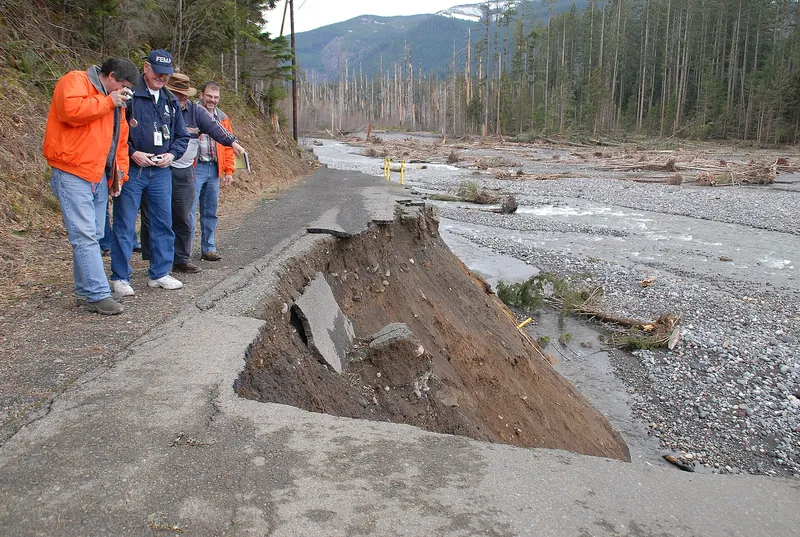

Per Wikipedia, the upper branches of the Santa Clara River join into a broad wash near Acton, and Palmdale to the north gets about 5.90 inches of rain a year on roughly 27 days. Storms are rare but can be harsh, particularly after a wildfire, which flooding after a wildfire explains.
How can a small business get ready for a hard freeze?
Write one page with the shutoff locations, phone numbers and the items to protect, and hand copies to anyone who opens or closes the building. Palmdale has about 52 mornings a year at or below freezing, so unheated storerooms and exposed pipes need attention before winter.
- Valves. Label the main, each suite's valve and the water heater supply, and photograph each.
- Sprinkler contractor. Record who maintains the system and the number to reach them.
- Contacts. Policy numbers, plus the plumber, electrician, owner, manager and agent.
- Keys. Note who holds keys and alarm codes.
- Priority list. Name the records, equipment and stock that move first, and store them off the floor.
- Cold nights. Away from the building, the Red Cross says to keep the heat at 55 F or higher and let cold water drip from faucets on exposed pipes.
The prevention guide lists common leak points, and how to thaw frozen pipes covers safe methods.
Where does a property manager go for more help?
Pick the page that matches where the water came from, because the source tells you who to phone first and what to expect from that call. Someone running several buildings can use the water damage guides like a shelf of checklists, and the glossary for words that show up on work orders.
The service areas page shows where this site's calls reach, including nearby Los Angeles County communities. Restoration teams differ, so confirm directly. The statewide site is Water Damage Cleanup California.
Sources: EPA guide to mold and moisture; EPA home mold cleanup page; EPA, commercial buildings guide, chapter 1; EPA, commercial buildings guide, chapter 3; Ready.gov flood page; IICRC S500 standard; Triple-I claims advice; Triple-I coverage explainer; CDI February 2025 release; claims rule 2695.5; claims rule 2695.7; CDPH mold FAQ; Red Cross frozen pipes page; Wikipedia, Palmdale; Wikipedia, Santa Clara River.