The short version
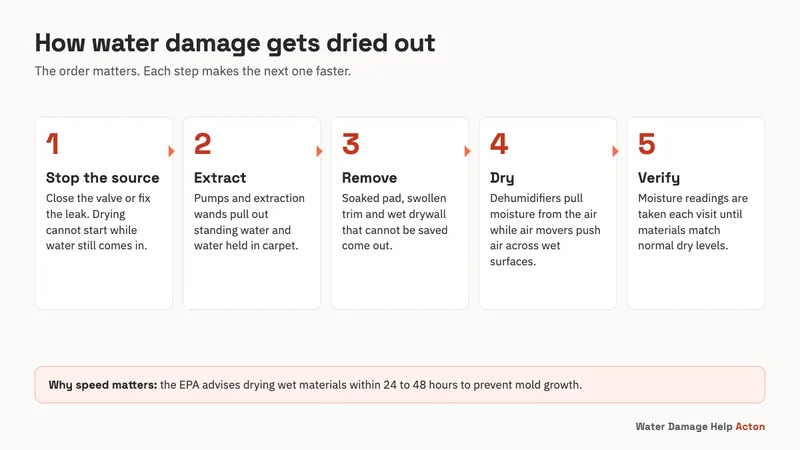
Drying a wet Acton, CA building relies on fans, dehumidifiers and moisture readings working together. The EPA suggests beginning inside 24 to 48 hours and keeping indoor humidity under 60 percent. Readings, not days, decide the end, so request the log.
What does structural drying actually do?
Structural drying means taking moisture back out of a building's framing, boards and finishes after a water event, on a plan. Fans speed up evaporation, dehumidifiers trap the vapor, and a meter tells you if any of it is working. For an Acton house, this stage decides whether the structure ends up sound or damp.
Think of it as a piece of water mitigation. Pumping goes first (see water removal and extraction), since vacuuming up puddles beats evaporating them. Drying deals with the moisture that soaked into wallboard, studs, cabinets and flooring.
Owners in Acton and Palmdale can call to reach a local water damage restoration team, whose gear, methods and scope are its own. Ask what it would do at your address.
Which machines are used to dry a wet building?
Air movers, dehumidifiers and, on some jobs, air scrubbers work together as a set, and every piece has its own role. The company picks the brands and how many units to place, so ask what will sit in each room and the reason for it.
| Tool | Job it does | Question to ask |
|---|---|---|
| Air mover | Sweeps air over damp surfaces to speed evaporation | Where is each one aimed? |
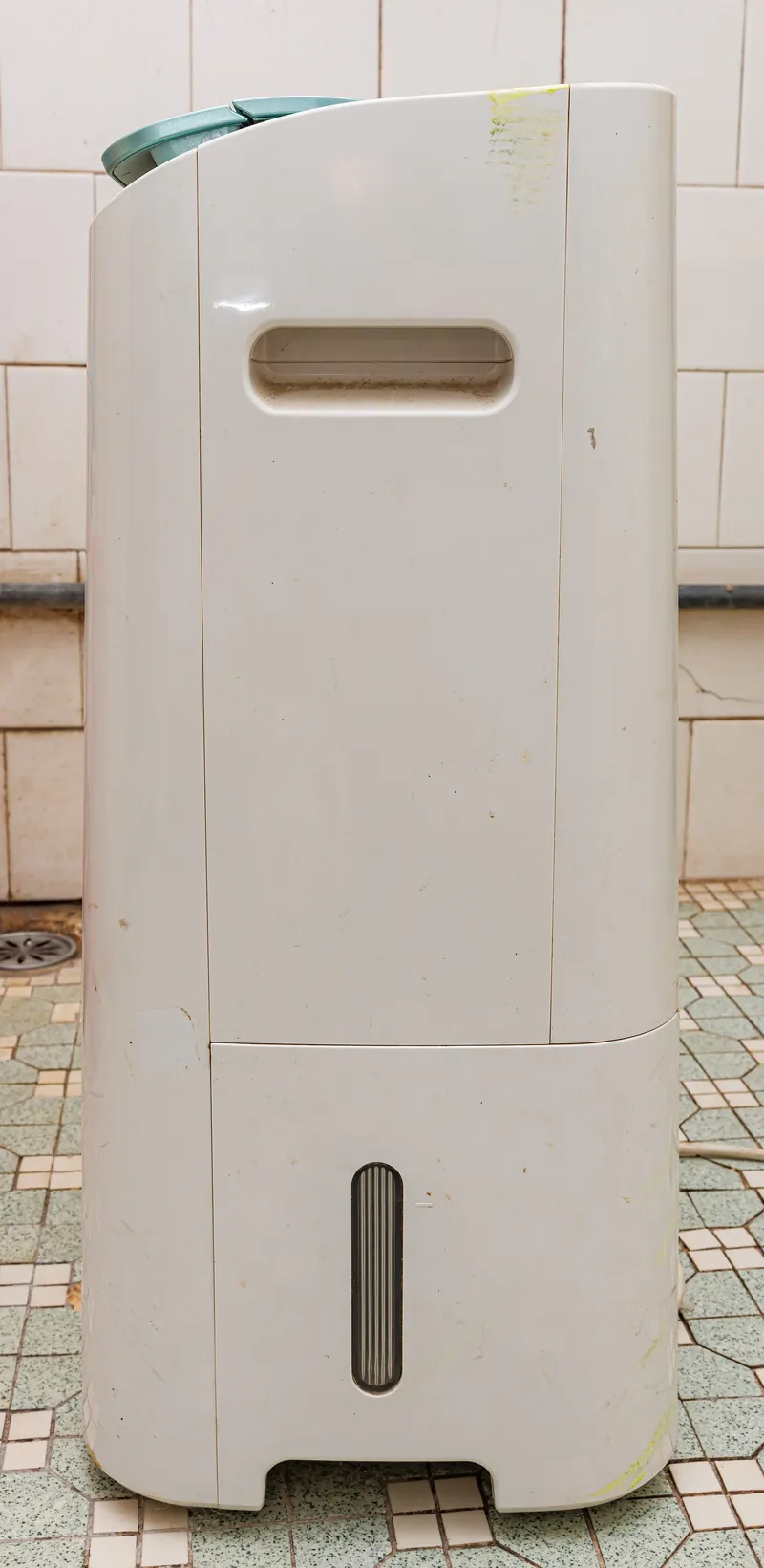
| Dehumidifier | Condenses the vapor that the fans lift off materials | Is the area closed off for it? |
| Air scrubber | Cleans airborne dust, chiefly with walls opened up | Is it needed here? |
| Moisture meter | Gives a dampness number for boards and wood at chosen points | Do I see the figures every time? |
| Thermal camera | Shows cooler wet patches hidden behind finishes | Is each image confirmed by a reading? |
A household fan stirs air without taking water out of the house, and fans running without dehumidifiers can shove humid air into dry rooms. Terms on a work form are explained in the water damage glossary.

How many days does structural drying usually need?
Often several days, but a meter, not the calendar, names the finish. Thick materials like studs and subfloor release water slowly. For mold prevention the EPA points to 24 to 48 hours for wet areas and belongings, which is the aim for starting work and for drying surfaces.
Deeper layers can take longer, and until the first readings arrive a provider can only estimate.
These factors lengthen or shorten the job:
- Hours spent wet before work began.
- Water category. Dirty water sends more material to the dumpster instead of the dryer.
- Material. Carpet and wallboard release water faster than hardwood or plaster.
- Concealed water. Soaked insulation inside an undamaged-looking wall drags the job out.
- Access. Built-in cabinets and tile can hold water against the wall behind them.
Any promised day count is only a guess. Someone who calls the job finished with no readings has proven nothing.
Can you rent drying equipment instead of hiring a provider?
A rental unit plus some airflow can handle a small clean spill on a hard floor. It cannot get at water inside walls or under flooring. If the water traveled, test with a meter before deciding, because a surface that feels dry may be wet beneath.
According to the EPA, a humidity meter runs $10 to $50, and condensation signals high humidity. It also suggests air conditioners or dehumidifiers where needed. That lets you monitor a room but cannot replace readings taken inside a wall.
For contaminated water, the EPA recommends someone experienced with that kind of damage. Set the rental price against the risk of sealing in damp material and discovering mold later. The wet carpet drying page covers a common middle case.
Do dry air and cold nights near Acton change how drying works?
Yes, they can. The process shifts water from materials to the air and then out of it, so conditions around the house count. Wikipedia describes Acton's summers as warm and dry, with no monthly average above 71.6 F, and lists neighboring Palmdale at only 5.90 inches of rain a year.
Dry outdoor air is no reason to prop windows open. Providers typically seal the drying zone so the dehumidifiers treat one volume of air. Ask whether windows stay shut and where to set the thermostat.
Winter nights matter too. Wikipedia's normals give Palmdale about 52 mornings a year at or below freezing. After a freeze break the heat generally stays on while drying runs, and the American Red Cross suggests never letting it fall below 55 F when you are out of town. See how to thaw frozen pipes for the plumbing side.
How do floors and subfloors behave while drying?
Slowly, and from the top down, so a surface can read dry while the layer under it stays damp. New flooring belongs only on a base that readings confirm is dry. No source here describes how Acton homes are built, so if yours has a slab or crawl space, ask how that changes the drying.
Each floor type reacts in its own way:
- Carpet and pad: padding normally goes; the carpet itself may be dried in place after lifting or replaced. More at wet carpet drying.
- Hardwood and engineered wood: planks swell and cup. A few flatten again during drying and many stay warped. Details at water damaged floor repair.
- Tile: the tile is usually fine, yet water may linger in grout and in the base below.
- Vinyl and laminate: water tends to creep beneath, which is why planks are often lifted.
When the water came from a leak below the floor, repair the plumbing first, since a pipe that keeps running keeps everything soaked. Slab leak water damage is the place to start in that case.
How can you tell the drying is complete?
When each material's reading lines up with a dry reference, typically an untouched area of the same material elsewhere in the home. Trust the numbers over the machines. Dated readings at marked points, kept in a log, are the proof to hold onto.
Each visit's entry should list room, material, reading and date, plus air conditions and equipment present. When numbers stop dropping, the provider ought to search for a concealed source, a wet cavity or trapped pocket.
A room that feels dry or an empty floor where machines stood is not proof. Ask what reading closed the job, and request a copy of the record. The cost guide shows how monitoring visits and equipment days can appear on an invoice.
What are your first moves with a wet room?
Shut off the water, secure the area and record the damage. Drying cannot start while the source runs or electrical risks remain. These steps are free, they support an insurance claim and they simplify whatever work follows once a provider arrives.
- Cut off the supply. For a plumbing leak, shut the main valve. Emergency water damage help covers the opening hour.
- Remove shock risk. With water near outlets or the panel, flip breakers only from dry footing. If that is impossible, an electrician is the call.
- Record it all in photos and video before moving things, which Triple-I recommends for claims.
- Raise what is easy to lift: rugs, books, cartons and furniture feet.
- Leave the AC running unless the unit or ducting was wetted.
- Request a provider connection and bring up equipment, readings and the log.
Waiting it out is a poor plan. The CDC wants flooded homes cleaned and dried completely and fast, inside 24 to 48 hours.
Can you stay in the house while it dries?
Possibly, though expect noise, warmth and a heavy electrical draw for days. The machines run through the night, and dehumidifiers warm a closed room. Plenty of people sleep elsewhere, notably when the wet room adjoins a bedroom or when anyone in the household is sensitive to noise.
- Noise: learn where units go and whether any can avoid bedroom walls.
- Power: a cluster of machines can overload a circuit, so raise it first.
- Pets and kids: keep them away from cords, blowing air and open walls.
- Do not shift units. A relocated machine can strand a damp spot.
If the water was contaminated, think twice about staying. Per the CDC, mold can provoke strong reactions in people with asthma or mold allergy, and lung infections in those with weakened immunity or chronic lung disease.
Will an insurer pay for drying?
Frequently, if a covered source such as a sudden plumbing failure caused the loss. Plumbing and roof leaks typically count as covered, per the NAIC, while ground water and runoff do not. The policy and the adjuster decide, not the provider.
In California, the insurance department separates flood, which homeowners policies omit, from other water damage, which they cover, and its claims guide adds that drying and dehumidifying can lower mold risk. Triple-I recommends saving receipts for protective steps and holding off on permanent repairs until an adjuster weighs in.
Flood is its own category: Triple-I lists it as excluded from standard homeowners and renters policies, and FEMA agrees most homeowners insurance leaves it out. The claim sequence and the state's 15-day acknowledgment rule are in water damage insurance claims.
What are the signs of unfinished drying?
If a smell returns, a patch stays damp or a reading climbs back up, the job is not done. A musty odor reappearing after the machines leave is the classic sign. Warped floors, bubbling paint and soft baseboards also point there.
- A sour or musty smell that comes back, notably in humid weather.
- Baseboards, cabinet bases or wallboard that feel cold, soft or clammy.
- Flooring that cups, buckles or lifts above a damp base.
- Dark spots on walls or ceilings; the mold guide lists next steps.
- Indoor humidity that stays over the EPA's 60 percent limit.
Spot any of these and ask for fresh readings before walls are closed. The EPA warns against painting or caulking moldy surfaces. After walls test dry, rebuilding is covered under water damage repair.
Not sure who covers your ZIP? Check the service areas or request a connection.
Sources: EPA moisture guide; EPA mold cleanup page; CDC mold and health page; Wikipedia on Acton; Wikipedia on Palmdale; Red Cross frozen pipes page; NAIC consumer page; CDI property claims guide; Triple-I, disaster coverage; Triple-I, claim settlement; FEMA flood insurance FAQ.