The short version
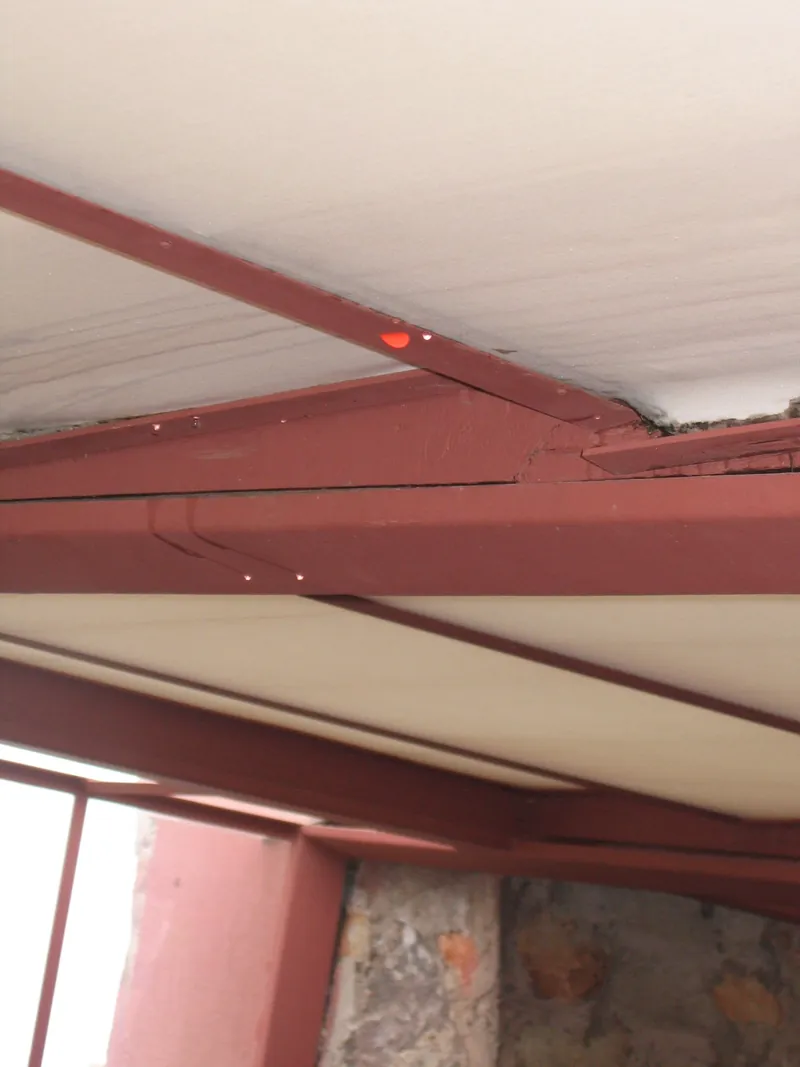
For roof leak water damage in Acton, CA, stay off the roof, catch the drips, photograph the damage and call your insurer. Hire a roofer for the opening and request a restoration team for the wet interior. Begin drying inside 24 to 48 hours if you can.
What is the first move when rain gets into my Acton home?
Protect people first, then contain the water. Roof leak water damage in Acton, CA usually shows up as a drip, a stain or a sagging ceiling. Move belongings and stay away from wet light fixtures, then catch what is falling and photograph everything before you clean.
- Stay off the roof. A wet roof is slippery, and the repair can wait for a roofer.
- Keep clear of ceilings that sag or bulge, and leave lights and fans in a wet room switched off.
- Set buckets and move furniture out of the drip line. Lift rugs and electronics onto dry ground.
- Take photos and video of the stains, the drips and the damaged belongings before anything is moved.
- Phone your insurance agent or company and ask what it wants you to do before repairs.
- Request a restoration team for the wet interior, and call a roofer for the roof itself.
Each of these jobs has its own page. Read about ceiling water damage repair if a ceiling is wet, and emergency water damage restoration for how a provider approaches the first day.
How can I tell where the water is getting in?
Look for the highest wet spot and trace it back, because water often runs along a rafter or a wall before it drips. The table lists common entry points, what each tends to look like inside the house and who is the first person to call.
| Where it gets in | What you see inside | First call |
|---|---|---|
| Missing, cracked or lifted roof covering | A ceiling stain that spreads in a ring and darkens at the edge | Roofer, then restoration team |
| Flashing around a chimney, vent pipe or skylight | Drips or stains near that fixture, mostly during rain | Roofer |
| Gaps around windows or siding | Wet sills, bubbling paint or a damp wall below a window | Window or siding contractor, then restoration team |
| Gutters or downspouts that dump water at the wall | Damp at the base of an exterior wall or along the ceiling edge | Gutter or general contractor |
| Water entering at ground level during heavy runoff | Wet flooring at an exterior door or low spot | Restoration provider, and your insurer about flood cover |
If you cannot find the source safely, say so when you call. A roofer can inspect from above, and a provider can measure moisture inside to show how far the water went.
Does it take much rain to cause damage around Acton?
No. Palmdale, the nearby city with a climate record, gets about 5.90 inches of rain in a normal year, spread over an average of 27 days, according to Wikipedia. After dry months, the first real storm is often the one that exposes a worn roof.
Los Angeles County swings between extremes, with dry stretches of 5 to 10 inches and wet years above 20 inches, Wikipedia says. NOAA Research reports that in the West Coast states, a handful of atmospheric river events can bring 30 to 50 percent of a year's precipitation.
The National Weather Service recorded 7.25 inches in Santa Clarita, in the same county, during the February 2024 storm. Its review adds that downtown Los Angeles took in roughly 65 percent of a season's rain across 48 to 60 hours. Those are not Acton numbers, but they show how fast a dry roof can be tested.
Is wind-driven rain a roof leak or a flood?
They are treated differently, and the difference matters for insurance. The state insurance department's claims guide separates flood, which homeowners policies leave out, from other water damage, such as rain entering through a roof hole that wind opened. Water that rises from the ground is a flood.
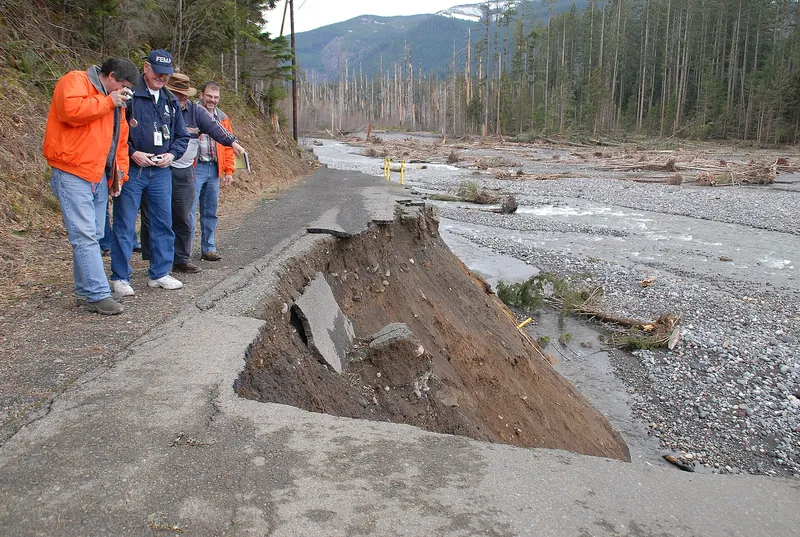

NAIC says ground water, rain runoff and snowmelt are typically not covered, while a leaking roof typically is. IICRC S500 puts outside surface water and rising flood water in Category 3, grossly contaminated. Rain through a roof opening is a different case, and the restoration team you reach decides the category on site.
Ready.gov notes that six inches of fast water can knock an adult off their feet, so stay out of it.
What happens to insulation and drywall after a roof leak?
Wet insulation and wallboard hold water long after the rain stops. Insulation that stays soaked loses its value and feeds mold, and drywall can sag, stain and soften. A provider checks what can dry in place and what has to come out.
- The EPA says porous materials such as ceiling tiles and carpet may have to be thrown away if they become moldy.
- The CDC advises removing soaked carpets and upholstery that cannot be dried quickly.
- Saturated insulation above a ceiling is heavy, and its weight can bring the ceiling down.
- Hidden moisture in a wall cavity is found with a moisture meter, not by looking.
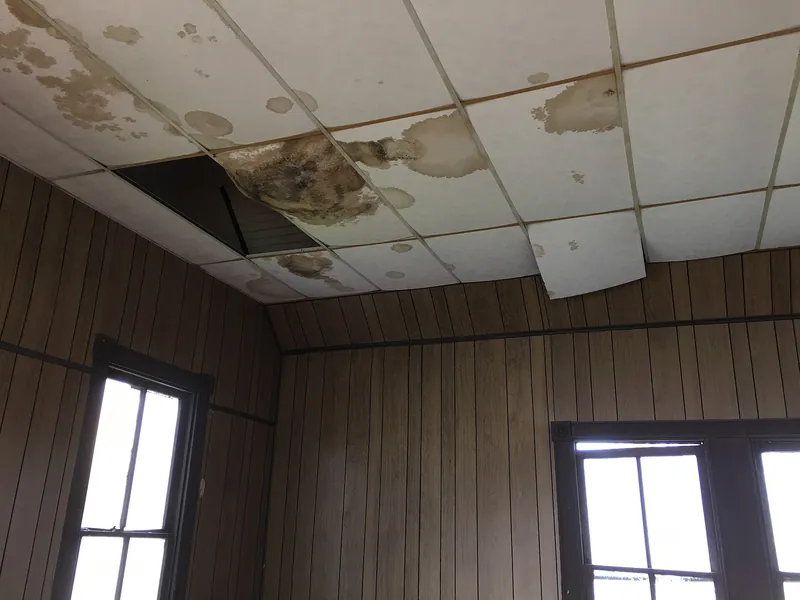

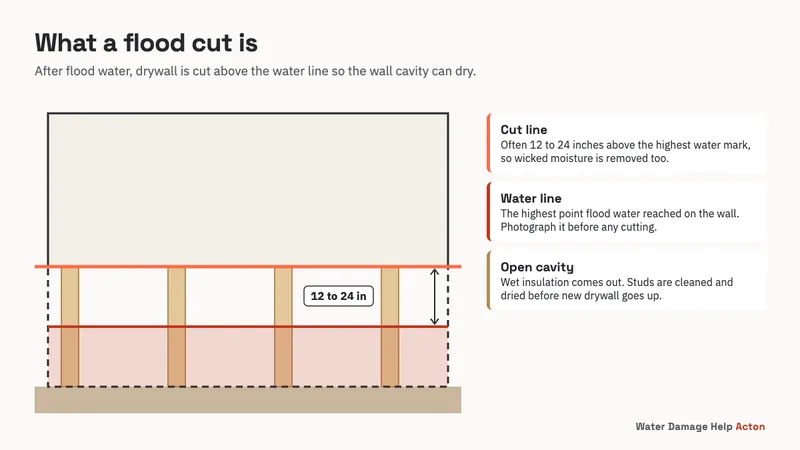
The drywall water damage guide covers cutting and drying wet walls, and water mitigation explains what a provider tries to save before repairs begin.
Does homeowners insurance cover a roof leak in California?
Often it does when a covered event opened the roof, but the cause and your policy decide. NAIC lists roof leak damage as typically covered. Triple-I adds that damage traced to poor upkeep is excluded, so an old, neglected roof may be treated differently.
- The state insurance department urges owners to tell their insurer about water damage right away and to stop leaks at the source.
- It also notes that mold from a covered peril may be covered, while Triple-I and NAIC say many policies exclude mold.
- The state describes the FAIR Plan as a bare-bones fire policy that requires another policy for water damage.
- Insurers have two clocks: 15 calendar days to acknowledge a claim, then 40 calendar days from proof of claim to decide.
Those deadlines come from 10 CCR 2695.5(e) and 2695.7(b). The water damage insurance claims guide lays out the claim steps, and the CDI line, 1-800-927-4357, helps if you have trouble opening a claim.
What about mudslides and debris flows after a wildfire?
Those are a separate risk, and a standard policy usually excludes them. In a February 2025 release, the state insurance department reminded consumers that home and business policies generally leave out flood, mudslide and debris flow, except where a recent wildfire or other covered peril was a direct or indirect cause.
The USGS found that a large fire made steep slopes above Montecito more prone to debris flows, and that an intense burst of rain on the burn area set off the January 2018 event. Wikipedia notes that rainy days can bring floods to low ground and mudslides to hills, especially after wildfires strip the slopes.
The upper branches of the Santa Clara River join into one wide wash near Acton, and Los Angeles County Public Works runs the countywide flood control system. This page cannot say which properties are exposed, because no source here maps Acton parcels. Read flooding after a wildfire and check the county's own information for your address.
How do I document damage and protect the house until the roof is fixed?
Photograph the damage, keep every receipt and make only temporary repairs until the adjuster has looked. The state insurance department says temporary repairs are among the most important steps, and that covering openings in a roof or wall with plastic sheeting or plywood is reasonable.
- Take wide and close photos, plus video, of each wet room and the visible roof damage from the ground.
- Keep receipts for tarps, plywood and hired help. The CDI says reasonable protection costs are reimbursed when you save them.
- Wait on major permanent work until the adjuster has assessed the loss, Triple-I says.
- Be cautious with anyone who pushes for large temporary repairs, a warning the CDI includes in its guide.
- Request itemized written bids that show each material and its price.
If you disagree with a settlement, Triple-I notes that many policies allow an independent appraisal. The guide to choosing a restoration company lists questions worth asking before you sign.
Who repairs the roof and who dries the house?
Those are separate trades. A roofer fixes the opening, a restoration team removes water and dries the interior, and a general contractor rebuilds what had to be removed. Restoration teams differ in what they do, so ask each one to explain its scope before you agree.
The Contractors State License Board limits unlicensed work to projects of $1,000 or less, and only when no workers are hired and no permit is required. It also cautions that a down payment should not exceed 10 percent of the contract price. Roof and interior rebuilds usually go past that, so check any contractor's license on the CSLB site.
Acton is unincorporated, so building permits come from Los Angeles County, and the repair permits page explains what to ask. For wet floors, see water-damaged floor repair.
How soon does mold start after a roof leak?
The EPA says that when wet areas and items are dried within 24 to 48 hours of a leak or spill, mold will not grow in most cases. After that, the odds shift, and hidden spots such as insulation or the back of a wall matter most.
The CDC lists a stuffy nose, sore throat, cough, wheeze and skin rash among mold effects, and says people with asthma or mold allergy can react strongly. The California Department of Public Health says California has no state licensing for mold assessors or remediators, so ask for references and get the scope in writing.
For a closer look, read mold after water damage and signs of water damage. Statewide background is on the California water damage site.
Sources: Palmdale climate on Wikipedia; Los Angeles County on Wikipedia; NOAA Research on atmospheric rivers; NWS Weather Prediction Center, February 4, 2024 review; CDI residential claims guide; NAIC homeowners page; IICRC S500; Ready.gov floods; EPA mold cleanup; EPA moisture guide; CDC on mold; Triple-I on claims; Triple-I on covered disasters; CDI FAIR Plan page; CDI statement on the FAIR Plan; 10 CCR 2695.5; 10 CCR 2695.7; CDI release, February 4, 2025; USGS, Montecito debris-flow event; CSLB press release on the $1,000 limit; CDPH mold FAQ.