The short version
Polybutylene pipes are flexible plastic supply lines, often gray, that plumbers treat as a leak risk in older homes. Look at exposed pipe near the water heater and shutoff, watch for stains and a moving meter, and shut the water off fast if a line leaks. Ask a plumber what you have and your insurer how it treats your loss.
What are polybutylene pipes?
Polybutylene pipes are flexible plastic water supply lines, usually gray, though other colors exist. Plumbers and home inspectors treat them as a known leak risk in older houses. If your house has them, the risk is a split or a failed fitting that lets water out inside a wall, ceiling or floor.
This page is about what to look for and who to ask. We did not find a government source that gives dates or failure rates for this pipe, so this page states none. A plumber who sees your pipes can tell you what you have and how it is holding up.
Acton has 2,821 housing units and 88.0% of occupied homes are owner-occupied, per 2020 census figures on Wikipedia. The age and plumbing of those homes are not documented here, so no one should assume a given Acton house has this pipe. Check yours.
How can I tell if my home has polybutylene pipes?
Look at the supply lines where they are exposed: near the water heater, under sinks, at the main shutoff and in the garage or attic. Polybutylene is plastic, usually gray, and it is not rigid like copper. Markings printed along the pipe may name the material. A plumber or inspector can confirm it.
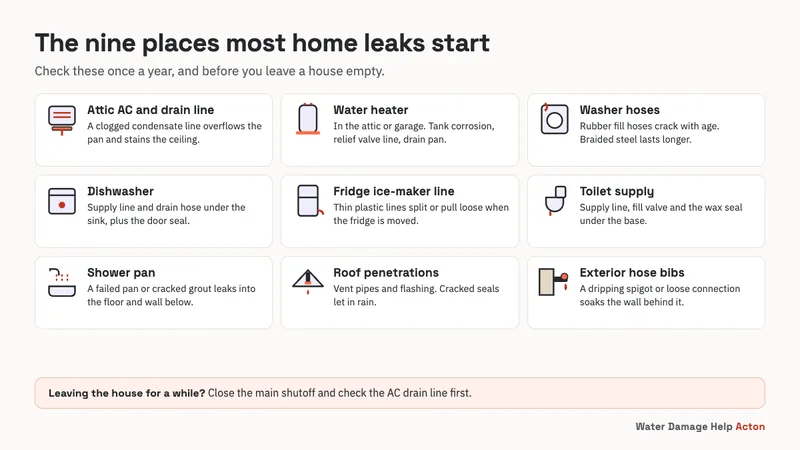
Do not guess from color alone, since other plastic pipes can look similar. Also look at the fittings. A pipe can be fine while a connector fails, and the reverse. If you are buying or selling, a home inspection should note the pipe type, and the guide to buying a water-damaged house lists questions to raise. Sellers should read disclosing water damage when selling.
What are the signs a polybutylene pipe is failing?
Signs are the same as for any supply leak: stains, damp drywall, a musty smell, a rising water bill, falling pressure or the sound of running water when nothing is on. The danger is that the leak may be inside a wall, so the first clue can be a soft or discolored spot.
| Clue | Where to look | What to do |
|---|---|---|
| Water meter moves with everything off | The meter or main shutoff | Shut the water off and call a plumber |
| Stain or soft spot on a wall or ceiling | Walls near bathrooms, kitchens and the water heater | Mark the edge and photograph it, see ceiling water damage repair |
| Musty smell with no source | Closets, cabinets and utility rooms | See water damage smell |
| Drip at a connector | Fittings under sinks and at the heater | Shut off that line and have it checked |
| Pressure drops or hissing | Fixtures and the walls behind them | Listen with everything off, then call a plumber |
A leak can start small and run for a long time. The signs of water damage guide lists more clues, and the slab leak page covers leaks under floors, if your house has that construction.
What does a hidden pipe leak do to a house?
It wets framing, drywall, insulation and flooring from the inside, where you cannot see or dry it. Wet drywall softens, wood can rot and mold can grow. The longer the leak runs, the larger the repair. A hidden supply leak is also under pressure, so it keeps pushing water all day.
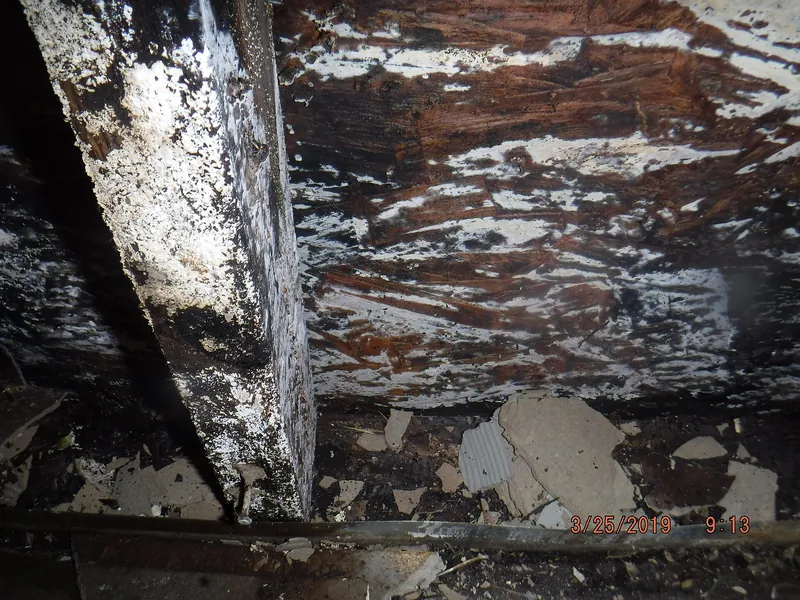

The EPA advises drying water-damaged areas and items within 24 to 48 hours to prevent mold growth, and says mold needs moisture to grow. A leak with no start date makes that window hard to meet, so measure first. Small mold patches under about 10 square feet, roughly 3 feet by 3 feet, can usually be handled by the owner, per the EPA. Larger or inside-the-wall problems should be checked first. See mold after water damage and drywall water damage repair.
Should I repair one leak or replace the pipes?
A plumber should answer that after looking at the system. One repaired fitting may be enough if the rest of the line is sound. If several spots have leaked or the pipe is in poor shape, replacing the supply lines may be cheaper than chasing leaks. Get the opinion in writing and a second quote.
| Option | Fits when | Ask the plumber |
|---|---|---|
| Repair one section | One failed fitting and sound pipe elsewhere | What did you test, and what is the condition of the rest? |
| Replace part of the system | A section keeps leaking or is hard to reach | Where does the new pipe stop, and what joins old to new? |
| Replace all supply lines | Several leaks or poor condition throughout | Is a permit needed, and who patches the walls? |
Plumbing work usually needs a licensed contractor in California. The Contractors State License Board says an unlicensed person may complete small projects up to $1,000 only if they do not hire workers and no building permits are needed, and that figure includes labor and materials. A repipe will go well past that, so check the license on the CSLB site before you sign. Acton is unincorporated, so permits come from Los Angeles County Public Works, Building and Safety. See repair permits.
What should I do first if a pipe leaks?
Shut the water off, then protect the house and record the damage. Do not wait to see if it stops. Every minute of pressure adds water to the wall. Each step below also supports a claim if you file one.
- Shut off the water at the main valve. The prevention guide shows where shutoffs are.
- Turn off power to wet areas if you can reach the panel safely and dry.
- Open a faucet low in the house to relieve pressure and drain the line.
- Photograph and video the damage before anything moves.
- Call a plumber and ask what pipe and fittings you have.
- Call your insurer and ask what it needs before work starts.
- Start drying or call a provider, and keep every receipt.
Does homeowners insurance cover a polybutylene pipe leak?
Often the water damage is covered if the leak was sudden and accidental, but not always. The NAIC says homeowners policies cover a sudden and accidental plumbing discharge, and that a claim may be denied if the insurer decides you neglected your plumbing. Triple-I says lack of maintenance is not covered.
That second point matters for an old system that wears out slowly. Ask your insurer directly how it treats your loss and whether it has any rules about this type of pipe, because the policy and the adjuster decide. Triple-I advises contacting your agent immediately, taking reasonable steps to protect the property, photographing the damage and saving receipts. Ask whether the repair of the pipe itself is covered, since policies often pay for the resulting damage and not the failed part. The insurance claims guide covers the process, and if you disagree with a decision, the California Department of Insurance takes complaints at 1-800-927-4357.
When should I call a restoration team?
Call when a leak has wet a wall, ceiling or floor, once the water is shut off. A plumber fixes the pipe. A restoration team dries and removes wet materials. You usually need both, and the drying should not wait for the pipe repair to be finished.
Restoration teams differ in what they handle, so confirm directly whether a company does moisture mapping, drying, tear-out and rebuild, or only some of those. Ask for moisture readings and photos in writing. For help picking, read choosing a restoration company, and see the Acton water damage guides.
Sources: NAIC, Will my homeowners policy cover a burst pipe; Triple-I, Which disasters are covered; Triple-I, claim settlement guidance; CSLB, handyperson exemption press release; EPA, Brief Guide to Mold, Moisture and Your Home; California Department of Insurance, Residential Property Claims Guide; CDI, complaint page; Wikipedia, Acton, California.