The short version
Shop vac water removal suits small amounts of clean water on floors and carpet. Never use one in sewage or flood water, and never plug one in while standing in water, which Ready.gov warns against. A vacuum lifts surface water only, so walls, pad and subfloor still need drying within 24 to 48 hours.
Can a shop vac remove water from a floor?
Yes, for a small amount of clean water on a hard surface or carpet, a wet/dry shop vac does a useful first pass. It lifts standing water fast. It does not dry the floor, the pad or the wall behind it, which is where most of the trouble starts.
Think of it as a way to buy time after a small spill, a minor appliance leak or a short pipe failure that you stopped quickly. Pulling the surface water out quickly is helpful. Treating the job as finished once the puddle is gone is the mistake.
This site cannot assess your home. The notes below come from federal and industry sources, plus common-sense safety steps, so you can decide whether a vacuum is enough or whether to call someone.
What kind of water is safe to vacuum up?
Only clean water from a known source, such as a supply line or a tap. The IICRC S500 standard sorts water into three categories: clean, grey and grossly contaminated, which covers sewage and rising flood water. A shop vac suits the first kind and not the third.
| Water source | Shop vac? | Better route |
|---|---|---|
| Clean supply line, sink or tub overflow | Reasonable for surface water | Vacuum, then dry the room and check below the surface |
| Washer, dishwasher or toilet overflow without waste | Use caution, and clean and disinfect the tank afterward | Ask a provider about grey water in carpet and pad |
| Sewage or a drain backup | No | A provider experienced with contaminated water |
| Storm runoff or flood water from outside | No | Flood cleanup with proper protective gear |
For sewage or other contaminated water, the EPA recommends a professional with experience in that kind of damage. See sewage backup cleanup and flood cleanup for those cases.
Is it safe to use a shop vac when the floor is wet?
Only if electricity is not part of the picture. Ready.gov warns against touching wet electrical equipment or standing in water around it, and says to cut the power only if that is safe. A plugged-in vacuum on a wet floor is exactly that risk.
- Check the room first. If water has reached outlets, a panel, a cord or an appliance, leave it and call an electrician.
- Use a unit made for wet pickup. Read the label or manual to confirm it, and use a standard household vacuum for dry debris only.
- Plug into a dry outlet on a circuit you know is undamaged, and keep the cord and connection out of any water.
- Do not power it with a generator indoors. The EPA says generator exhaust is toxic and a generator should never run inside a home, garage or shed.
If you cannot tell whether the circuit is safe, stop. A wet room with live power is not a job for a vacuum, and a quick call to an electrician costs less than an injury.
What does a shop vac leave behind?
It leaves water in everything that is not a visible puddle. Carpet pad, the bottom of drywall, baseboards, cabinet bases and the subfloor all soak up water, and a vacuum nozzle cannot reach it. That hidden moisture is what turns a small leak into a mold problem.
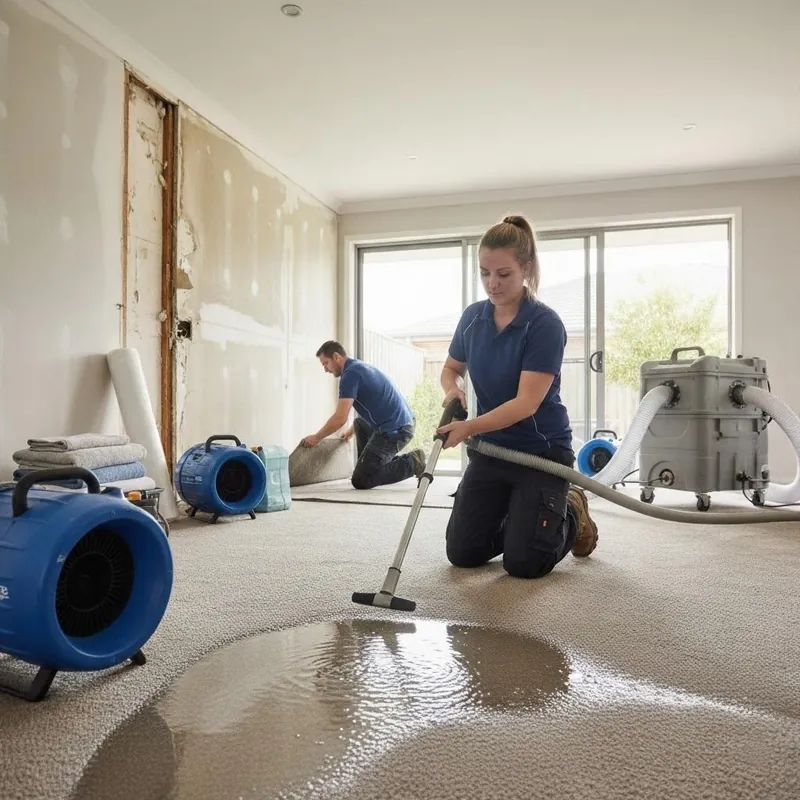
The EPA says to dry water-damaged areas and belongings quickly, in 24 to 48 hours, to keep mold from growing, and to throw out anything that has stayed wet longer than that. A vacuum starts that clock well but does not finish it.
Our water removal page explains how providers pull water from structures, and the structural drying page covers the equipment that finishes the job.
How do I use a shop vac on carpet and hard floors?
Work slowly and in overlapping strips, and empty the tank before it fills. On hard floors, a squeegee nozzle pulls water toward the vacuum. On carpet, press the nozzle down and pull it toward you, then lift the carpet edge to see how wet the pad is underneath.
Carpet is where a vacuum helps most and misleads most. The surface can feel nearly dry while the pad holds water. The CDC says soaked carpet and upholstery that cannot be dried promptly should come out, so check the pad before you keep it.
Read wet carpet drying for how to judge whether carpet can be saved, and water-damaged floor repair for wood, laminate and tile.
Can a shop vac pull water out of a wall or from under flooring?
No. A shop vac moves water you can reach with a hose, not water inside wall cavities, insulation, subfloor layers or under floor planks. Water in those places stays put, so those areas need to be opened, dried with moving air and checked with a moisture meter.
If water ran down a wall, along a baseboard or under a cabinet, assume it went somewhere you cannot see. Look for swelling at the bottom of the wall, a spongy floor edge or a smell. The signs of water damage guide lists what to check.
Do not drill or cut into a wall you suspect is wet until you know where wiring and pipes run. Restoration teams differ in how they check and open walls, so confirm directly how any provider plans to test for moisture.
Will Acton's dry air dry things out for me?
It helps, but not enough to rely on. Acton has warm, dry summers, and nearby Palmdale averages only about 5.9 inches of rain a year, according to Wikipedia's climate summary. Dry outdoor air does not reach the inside of a wet wall, and closed windows trap humidity in the room.
Aim for the EPA's humidity range of under 60 percent, ideally 30 to 50. Run a fan, open a window if the weather allows and use a dehumidifier in a closed room.

Palmdale also has about 52 freezing mornings a year. On cold nights, keep the room warm enough that moisture does not settle on cold walls and windows.
Does using a shop vac affect my insurance claim?
It can if you clean up before documenting the damage. Triple-I's advice is to photograph or film the damage, keep receipts and hold on to damaged items until the adjuster has looked. Take photos before you vacuum, and keep a note of what you removed and when.
California's insurance department tells homeowners to track down and stop the leak, and notes that flood is excluded while other water damage is not. Report the loss first, then ask what the insurer wants kept.
Taking reasonable steps to protect the home is part of any claim, and a vacuum can be one of them. Our water damage insurance claims guide lists the order of steps.
How do I empty and clean the shop vac afterward?
Empty it outdoors, wash it and let it dry. Dirty water in a closed tank grows bacteria and mold, and the smell spreads through the garage or house. Rinse the tank and hose, wash the filter according to the manual and leave everything open to dry.
The EPA says to avoid or limit direct contact with contaminated water, wash your hands often with soap and report cuts or open wounds. Wear gloves while you empty the tank, and keep children and pets away from it.
When should I stop using a shop vac and call a provider?
Stop when water keeps coming back, when it has reached walls, ceilings or cabinets, or when carpet pad is soaked. Also stop if the source was sewage or flood water, if you smell a musty odor, or if you cannot find where the water came from.
A provider can extract water with stronger equipment, open the wet areas and set up drying. Restoration teams differ in what they offer and how they work, so confirm directly. Our choosing a restoration company guide lists questions to ask.
What should I do first when water is on the floor?
Stop the water, make the room safe and then remove what you can reach. The order matters because every later step depends on the source being shut off and the electricity being safe to be near. Skipping ahead to the vacuum is the most common slip.
- Shut off the water at the fixture or the main. The burst pipe guide shows where.
- Check for electrical risk and stay out of standing water near outlets or cords.
- Photograph the damage before you move anything.
- Vacuum clean water from reachable surfaces, emptying the tank often.
- Lift or open carpet edges, baseboards and cabinet doors so air can reach damp areas.
- Start fans and a dehumidifier, then call your insurer and, if needed, a provider.
Browse our water damage guides for pages that match your source of water.
Sources: Ready.gov flood safety page; EPA flooding page; EPA brief guide to mold and moisture; EPA mold cleanup page; CDC mold and health page; IICRC S500 standard; Triple-I on settling claims; CDI claims guide; Wikipedia on Palmdale.