The short version
Wet carpet drying in Acton, CA starts with a shut valve, extracted water and moving air. Clean-water carpet is frequently salvageable. Grey water usually ruins the pad, and carpet touched by flood water or sewage is removed. Mold risk grows once the 24 to 48 hour EPA drying window closes.
What should I do first when carpet is soaked?
Close the water off, clear the room and start air moving. Wet carpet drying in Acton goes best when it starts early, because the pad underneath keeps holding water long after the top of the carpet feels dry under your hand.
- Stop the source. Shut the valve or call a plumber for the line. Drying cannot begin while the leak runs.
- Kill the power to the wet rooms at the panel, but only from dry footing. Unplug anything resting on the carpet.
- Identify the water. Supply water, appliance water and sewage or flood water call for different responses, and the next table sorts them.
- Move furniture off the carpet. Pieces that must stay get foil or plastic under their legs, so wood stain does not bleed into the fibers.
- Photograph the room and the source before any cleanup begins.
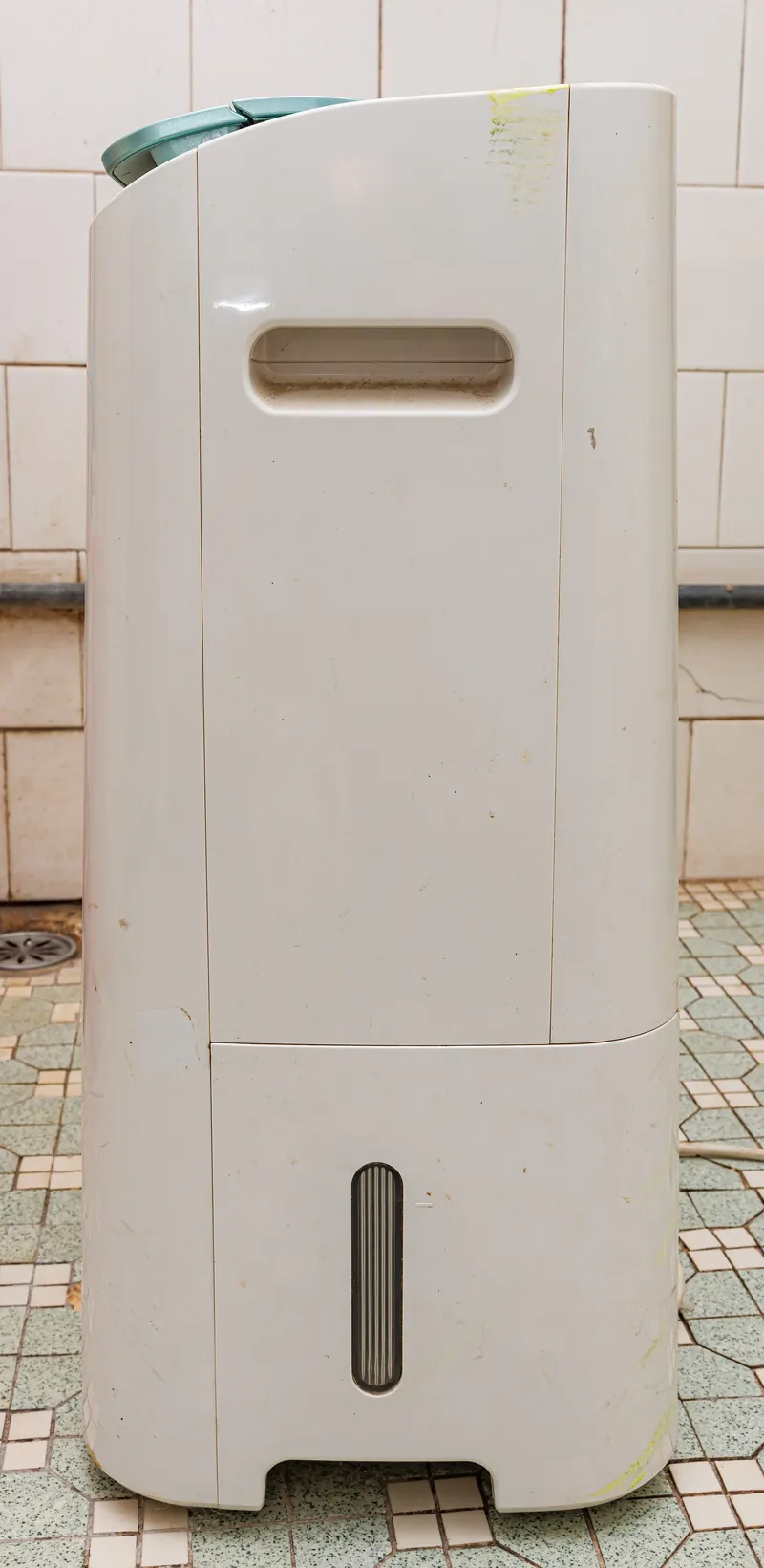
- Start fans and a dehumidifier. The EPA wants wet materials dry inside 24 to 48 hours, before mold takes over.
- Call your insurer, then ask a provider what is in scope. Carpet extraction is not offered by every company, so confirm it on the call.
Carpet that sewage or outside flood water reached is a different job, so stay off it and read the contaminated-water section below. A failed supply line is covered on the burst pipe page. The full process sits on the water removal page.
Can wet carpet be saved?
Frequently, if the water was clean and drying began fast. The category of water drives the call. Clean supply water often permits drying in place, grey water typically sacrifices the pad, and contaminated water sends carpet and pad both to the dump.
| Water category | Common sources | Carpet | Pad |
|---|---|---|---|
| 1, clean | Supply line, burst pipe, tub overflow | Often dried in place if work starts promptly | Dried, or replaced if it stays wet |
| 2, grey | Washer, dishwasher, toilet overflow without waste | Can often be cleaned and dried | Usually removed |
| 3, grossly contaminated | Sewage, river or creek flood water, outside surface runoff | Removed | Removed |
The IICRC S500 standard defines these categories, and the water damage glossary puts each in plain words. Clean water that sits can turn dirtier over time, so speed matters as well as source.
Should the pad be kept or replaced?
Usually replace it. Pad is foam or fiber, and it drinks water like a sponge and gives it up slowly. The carpet on top dries sooner and can be cleaned, while a soggy pad is where odor and mold tend to start.
A provider may peel back one corner, remove the pad, and dry the carpet and the floor separately. New pad goes down when the carpet is laid back. Glued carpet or backing that is coming apart makes full replacement more likely.
Is a wet vac enough to pull water out of carpet?
For a small clean spill, a wet vac is a fair start. Beyond that, no. A home unit skims the top layer, and commercial extraction draws far more from dense fiber and pad. A household vacuum has no place on wet carpet, since it mixes water with electricity.
Extraction is only the first half. Moving air and a dehumidifier still have to remove what remains, as the structural drying page describes. The shop vac page covers what a home unit can and cannot do.
How do I dry carpet properly?
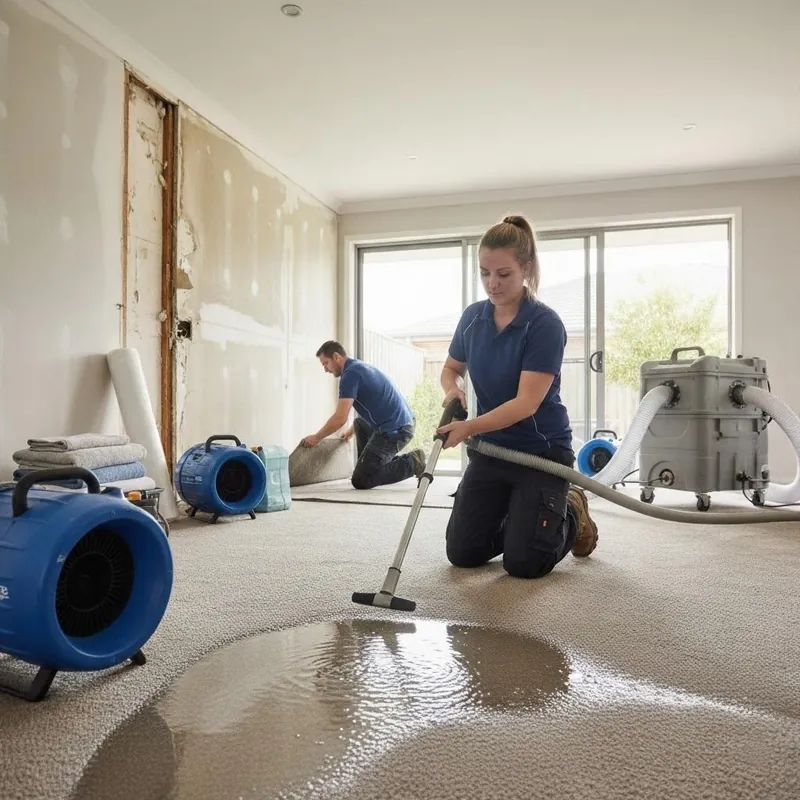
Extract first, then dry with moving air. For clean water that typically means removing standing water, lifting a corner or taking out the pad, aiming air movers across the fibers and running a dehumidifier. A small damp patch might need only fans and ventilation.
- Air movers blow air across the carpet and beneath a lifted edge.
- Dehumidifiers take moisture out of the air. The EPA recommends keeping indoor humidity below 60 percent, ideally 30 to 50.
- Moisture readings on the carpet, the pad and the floor mark the finish line. Fingers cannot.
Stay off damp carpet and keep heaters away from it. Equipment stays on until readings settle at a normal level for the house.
What about the tack strip and the floor beneath?
Either can stay wet after the carpet is dry. Tack strip is plain wood, and wood absorbs water. Left damp, it can stain, swell or grow mold around the room's perimeter, and the floor below the pad may hold moisture too.
With the pad out, the floor can be tested and dried directly. Concrete keeps moisture for a long stretch, and fresh pad over damp concrete can trap water again. Ask how the provider proves the floor dry before carpet returns.
Carpet that stays damp with nothing spilled on it may be wicking water from below. The slab leak page lists warning signs, but no source documents how Acton homes are built, so check your own.
Why does wet carpet smell?
The smell comes from moisture caught in the pad and backing, where bacteria and mold feed on it. Carpet that dries thoroughly and quickly usually loses the odor. If the smell returns after the surface feels dry, something underneath is still wet, and that needs a closer look.
An odor that returns on humid days suggests a damp pad or floor and not the carpet top. Deodorizers only cover it up. The water damage smell page walks through tracking down the source.
How fast does mold show up in carpet?
Fast, so the first day or two matters most. Per the EPA, wet materials should be dry in 24 to 48 hours to keep mold from starting. The CDC adds that after a flood, soaked carpet that cannot be dried promptly should be removed.
Mold can bring on congestion, a sore throat, coughing, wheezing, itchy eyes or a rash, the CDC says, and asthma or mold allergy can make reactions severe. Carpet that stayed wet and smells musty counts as a mold risk. For more, read mold after water damage.
Can a freeze or a failed appliance soak the carpet?
Yes. A pipe that split in a cold snap can release a lot of water once it thaws, and a water heater or washer line can do the same. Palmdale, Acton's neighbor, averages 52 mornings a year at or below freezing, per Wikipedia.
The American Red Cross lists supply pipes in attics, garages, crawl spaces and kitchen cabinets as most exposed to cold, and advises heat no lower than 55 F when you are away. Frozen-pipe steps are on the frozen pipes page.
California requires water heaters to be braced against earthquake motion under Health and Safety Code 19211. See water heater leaks and appliance leaks for carpet that sits near those units.
What if flood water or sewage soaked the carpet?
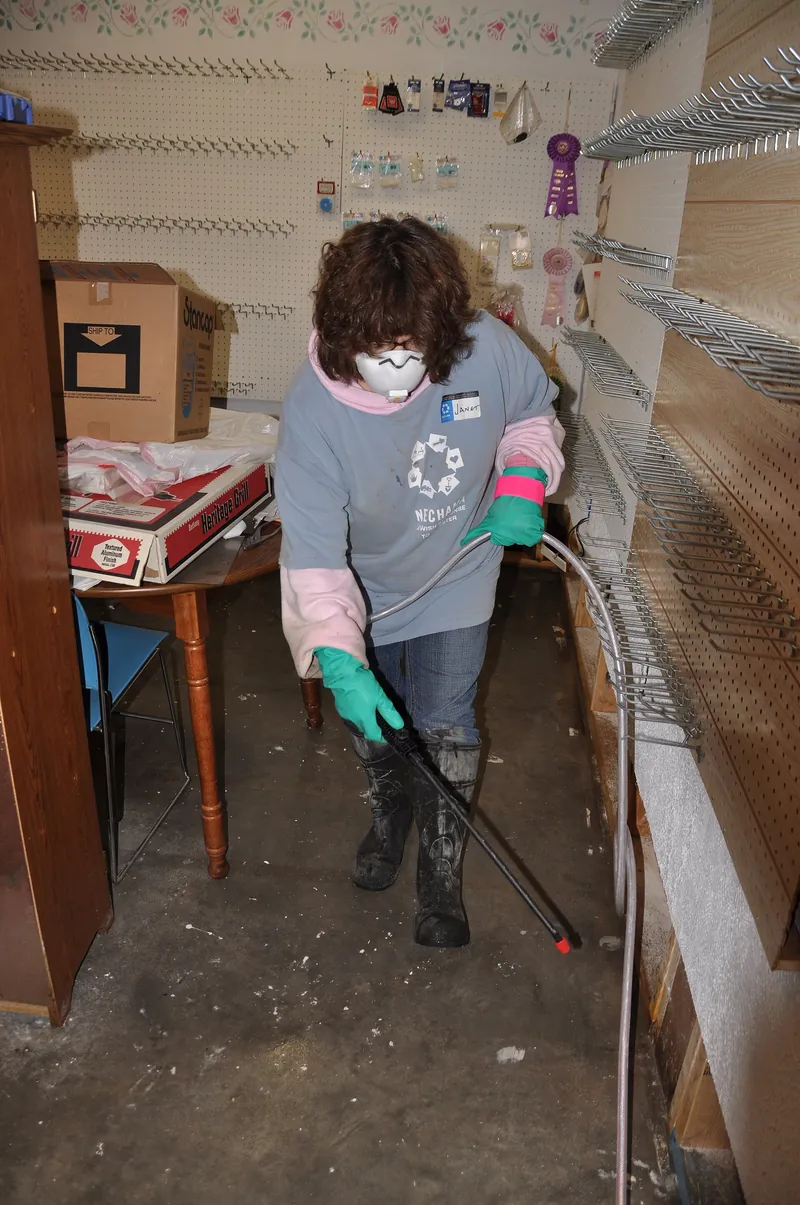
Remove it. Sewage or flood water leaves carpet and pad that no cleaning makes safe. For this type of loss the EPA points owners toward a professional experienced with contaminated water, and the CDC recommends boots, gloves and goggles throughout.
IICRC S500 classes rising river and creek water as Category 3. Wikipedia says the upper Santa Clara River branches merge into a broad wash near Acton, which is area background and says nothing about your property. Sewage usually comes up at the lowest drain, so carpet close to a tub or floor drain is exposed first.

Steps appear on the flood cleanup and sewage backup cleanup pages. Flood falls outside standard homeowners policies, a point the insurance claims guide unpacks.
How long does carpet take to dry?
No single number fits every job, since water type, pad, airflow and humidity all shift it. The EPA sets 24 to 48 hours as the goal. A provider follows the readings and leaves equipment running until they return to normal.
Carpet that has been extracted and fanned dries quicker than carpet left to itself. Heavy furniture, shut doors and an old pad all slow things down. When outdoor air is already humid, a dehumidifier outperforms open windows.
Carpet that is still damp after a couple of days deserves a call to the provider or insurer.
What does wet carpet repair cost?
Across the country, Fixr prices carpeting restoration between $4.75 and $10.50 a square foot. That covers work on the material, not replacing a whole room, and the total moves with water type, area and whether pad or floor is involved. It is no Acton quote.
Prices belong to each provider, so collect itemized written estimates. Triple-I suggests bids that list materials and prices line by line. California's Contractors State License Board says a project under $1,000 may go unlicensed from 2025 only when no workers or permits are involved. See restoration cost.
Does California insurance pay for wet carpet?
The cause decides. California's insurance department says flood is outside homeowners policies while other water damage is inside them. Triple-I says neglected maintenance is excluded, so a slow leak can be refused, and NAIC notes mold is often left out.
Insurers answer to clocks. Title 10 section 2695.5 requires acknowledging a claim in 15 calendar days, and section 2695.7 allows 40 calendar days from proof of claim to decide. The Department of Insurance hotline is 1-800-927-4357.
Triple-I suggests photos, saved receipts and keeping damaged items on hand until an adjuster comes by. Renters and landlords should read the renters page, since responsibility differs.
When can I handle wet carpet myself?
A small clean-water spill that you catch at once is within reach. Run a wet vac over it, set up fans and a dehumidifier, and confirm with a reading that both carpet and pad are fully dry before you stop.
Call for help if the water is grey or dirty, several rooms are wet, the carpet has sat damp or a musty smell has settled in. Unsure? Ask for readings before deciding. Keep your photos and receipts regardless.
Sources: EPA moisture guide; EPA cleanup page; CDC mold page; IICRC S500 overview; Red Cross frozen pipes page; Wikipedia on Palmdale; Wikipedia on the Santa Clara River; Health and Safety Code 19211 text; CDI claims guide for homeowners; 10 CCR 2695.5; 10 CCR 2695.7; CSLB, handyperson limit; NAIC homeowners page; Fixr cost guide; Triple-I on covered disasters; Triple-I on settling claims.