The short version
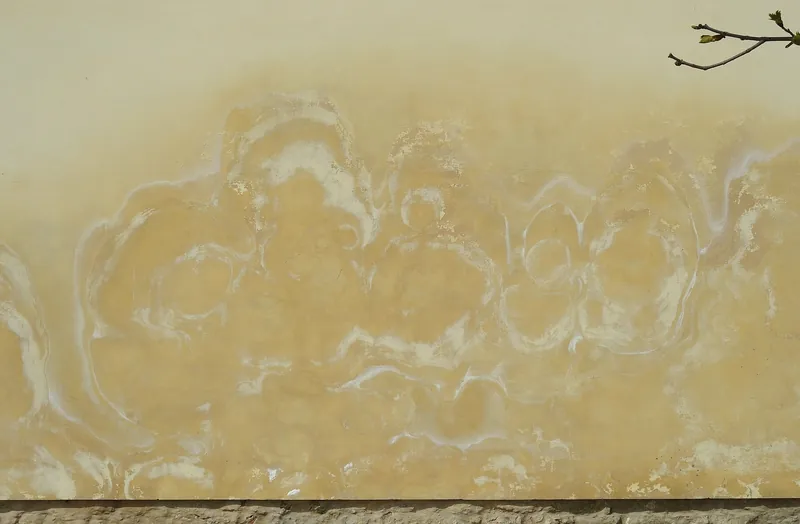
Drywall water damage repair in Acton, CA turns on two facts: what kind of water soaked the wall and how long it stayed wet. Clean water caught early may dry in place. Sagging board, dirty water or a long soak usually means cutting it out. Skip the paint until readings show a dry wall.
Can wet drywall be dried in place, or must it be cut out?
Sometimes it can stay. Drywall that took a short soak of clean water and got air quickly may dry where it hangs. Drywall that sagged, soaked for days or met dirty water is usually cut out. For drywall water damage repair in Acton, a meter reading settles it.
Looks mislead. A wall face may seem fine while water sits in the cavity behind it, so ask the provider for readings from before and after drying. Methods and opinions differ from one company to the next.
For the bigger picture of how drying and rebuilding fit together, see water damage repair in Acton.
How does the type of water change the answer?
Cleaner water gives a wall better odds. The IICRC S500 standard sorts water into three categories, and the category tells a provider how cautious to be. Clean supply water leaves room for drying. Dirty water, from a drain or from outside, usually means the board goes.
- Category 1: clean water from a supply line or a burst pipe.
- Category 2: grey water, from sources like laundry or dish machines, or a toilet that overflowed without waste.
- Category 3: grossly contaminated water, including sewage and rising flood water from rivers, streams or outside surface runoff.
With Category 3 water in a wall, the EPA points owners to a professional who knows contaminated-water damage. Sewage cases are covered on the sewage backup cleanup page. A leak from an air handler usually begins as clean water, as the AC leak page explains.
Which parts of a wall dry in place and which come out?
Dense, solid parts tend to dry where they are, and soft, fibrous or paper-faced parts tend to come out. The table is a general guide only. The water category and the readings make the final call, and two providers can reach different conclusions about the same wall.
| Wall part | Often dries in place when | Usually comes out when |
|---|---|---|
| Gypsum board | The wetting was brief, clean and caught early | It sags, softens, crumbles, or the water was dirty |
| Fiberglass batts | They are only slightly damp and the provider agrees | They are matted, slumped or touched by grey or black water |
| Trim and baseboard | Solid wood that has not swollen | Particleboard or MDF that has puffed up |
| Studs and bottom plate | They dry once the wall is open to air | They look dark, feel soft or keep reading wet |
| Paint and texture | The wall has dried and nothing leaks anymore | It bubbles or peels over wet board |
Drying a cavity means pushing air through it, so a provider may pull trim, drill small holes or open the lower wall. The structural drying page shows what that equipment does.
How do I find water inside a wall?
Look, touch and smell first, then confirm with a moisture meter. Water in a wall usually announces itself through a stain, a soft spot or an odor well before anything pools on the floor. If you wait for a puddle, the leak has probably run a long while.
- Stains or bubbled paint that spread or come back after the wall dried.
- A patch that feels soft or cool under your palm.
- Swollen baseboards or trim pulling away from the wall.
- A stale smell along one wall, a cabinet run or a corner.
- A water bill that climbs with no visible leak.
A pin or pinless meter reads a wall without making holes. Walk the house with the signs of water damage guide. Pipes often serve two rooms, so check the far side of the wall too.
What should I do first when a wall gets wet?
Close off the water first, then move air across the wall. Six quick steps limit the damage while you wait for help, and they cost almost nothing. They also give the provider and the adjuster a clear record of how the wall looked at the start.
- Close the valve for the leaking pipe or fixture. Shutoff locations are on the burst pipe page.
- Cut the breaker for the wet area, only if the panel is reachable without wading.
- Photograph the wall and trace the edge of the stain in pencil so you can see whether it grows.
- Pull furniture a few inches off the wall so air can pass over the surface.
- Run fans and a dehumidifier. Per the EPA, aim for indoor humidity below 60 percent, with 30 to 50 percent best.
- Ask for a moisture reading before anyone closes up or paints the wall.
What is a flood cut, and when is one used?
A flood cut is a straight, level cut across the wall a little above the highest water mark. Everything below it comes out so the cavity can dry. It is the move when standing water soaked the foot of a wall, or when the water was contaminated.
Gypsum draws water upward like a wick, so dampness often climbs past the visible line. A meter tells the provider where dry board starts, and the cut is made above that point.
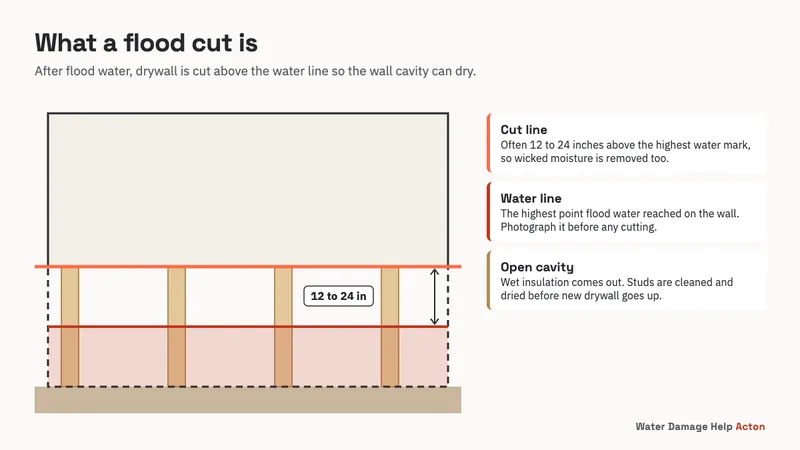
Photograph the water line before anyone cuts, since an adjuster may ask to see it. After the removal, framing is cleaned and dried, and new board goes up only when the wood reads dry. The sequence is laid out on the flood cleanup page.
Is wet insulation a problem inside the wall?
Yes, because soaked insulation holds water against the studs and dries slowly. Fiberglass batts slump and keep moisture at the bottom of the cavity, so framing can stay wet for a long time after the wall face feels dry to the hand.
Ask the provider whether the insulation will be pulled or left to dry, and why. Pulled batts are replaced once the cavity reads dry. Claims often list insulation separately from drywall, so keep photos and invoices for both.
Attic insulation behaves the same way. It can soak through above a ceiling that still looks fine after a roof or air handler leak, as the ceiling repair page describes.
What happens to baseboards and trim?
Swollen trim tells you water reached the bottom of the wall. Solid wood can sometimes be dried and reused. Particleboard and MDF puff up and rarely return to shape, so plan on replacing those pieces whether or not the wall itself dries.
Trim usually comes off first anyway, so the wall behind it gets airflow. If you want to reuse pieces, number them as they come off. Baseboards that swell along a wall with no obvious leak can mean a pipe is weeping inside it.
Can I paint over a water stain?
Not yet. Paint over a wet wall seals moisture in and hides a problem that keeps growing. EPA guidance says not to paint or caulk moldy surfaces. Repairs and full drying come before any finish, however small the stain looks.
The right order is simple: fix the leak, dry the wall completely, then clean or replace what is damaged. Stain-blocking primer improves appearance only, and only on a dry wall that is no longer leaking.
If a stain returns, water is still reaching the wall. New joint compound on damp board fails for that reason too.
Can a freeze or a roof leak soak a wall?
Yes, both can. A split supply line inside a wall releases water as it thaws, and a roof leak can run down the framing. Palmdale, next door, averages 52 mornings a year at or below freezing, according to Wikipedia's climate summary.
The American Red Cross names attics, garages, crawl spaces and kitchen cabinets as places where supply pipes are most exposed to cold. Its advice for time away is to keep the heat no lower than 55 F. Palmdale gets only about 5.9 inches of rain a year, so a stain on an exterior wall after a storm deserves a close look at the roof and flashing.
According to NAIC, plumbing leaks and roof leaks are typically covered, and runoff and ground water are not. Thaw steps are on the frozen pipes page, and storm entry points on the roof leak page.
What if storm or debris flow water reached the base of a wall?
Treat the lower wall as contaminated. Outside surface water falls under Category 3, so the board and insulation at the base are usually removed, not dried. The CDC advises boots, gloves and goggles for cleanup, and never mixing bleach with ammonia.
Wikipedia notes that the upper branches of the Santa Clara River join into a broad wash near Acton, which is context for how water moves through the area and not a statement about your lot. After a wildfire, mud and debris can move in modest rain, a topic covered in flooding after wildfire.
A February 2025 California Department of Insurance release notes that policies usually exclude flood, mudslide and debris flow, except when a recent wildfire or other covered peril set them off. Check your policy and talk to your insurer before throwing anything away.
What does drywall repair cost, and who can do it?
Fixr lists drywall restoration at $1.50 to $3 per square foot nationally, and plaster at $6.25 to $18.75. Bob Vila gives the same drywall range. These cover the repair itself, not drying, extraction or paint, and none of them is an Acton quote.
Providers set their own prices, so request itemized written bids. California's Contractors State License Board says a project under $1,000 may go unlicensed from 2025 only when no workers or permits are involved. Acton is unincorporated, so Los Angeles County handles permits. See repair permits and restoration cost.
Does California insurance pay for wall damage?
Often, when plumbing or a roof leak caused it. California's insurance department states that flood is not covered by homeowners policies, while other water damage is. Triple-I adds that neglected maintenance is excluded, and NAIC notes mold often is too.
Insurers face deadlines. Title 10 section 2695.5 requires acknowledging a claim within 15 calendar days. Section 2695.7 sets 40 calendar days from proof of claim for a decision, and a denial must come with written reasons.
The Department's consumer hotline is 1-800-927-4357. Triple-I advises protecting the property, photographing damage and waiting for the adjuster before major permanent repairs. The insurance claims guide has the full steps.
Sources: Fixr cost guide; CSLB, handyperson limit; CDI, 2025 mudslide bulletin release; 10 CCR 2695.7; 10 CCR 2695.5; CDI claims guide for homeowners; Red Cross frozen pipes page; Wikipedia on Palmdale; Wikipedia on the Santa Clara River; EPA moisture guide; EPA cleanup page; CDC mold page; IICRC S500 overview; NAIC homeowners page; Fixr cost guide; Bob Vila cost guide; Triple-I on settling claims.