The short version
A water damage repair permit in Los Angeles County comes from Public Works, Building and Safety, since Acton is unincorporated. Replacing pipes, wiring or equipment generally needs one. Painting, carpeting and fixing a leak without replacing pipes are listed as exempt. Confirm your specific scope with the District Office before work starts.
Do water damage repairs need a permit in Acton?
Some do and some do not, and the scope of the work decides. Los Angeles County Public Works says minor home improvement projects may not need a permit, while new, expanded or replaced plumbing, electrical and mechanical work generally does. Drying a room is different from rebuilding it.
Fixing or finishing what is already there often needs no permit. Replacing pipes, wiring or equipment, or rebuilding parts of the structure, often does. The county's exemption list has the final word.
This site is not a building department, and it cannot grant or confirm a permit. The sections below explain how the county describes its rules, so you can ask better questions before work begins.
Who issues building permits in Acton?
Los Angeles County does. Acton is an unincorporated community, so there is no city building department, and permits come from Los Angeles County Public Works, Building and Safety. The county says permits are obtained from the Building and Safety District Office that serves the project address.
The county runs an online portal called EPIC-LA for the unincorporated areas, where you can submit documents, pay fees and apply. Inspections for unincorporated areas are also requested through it.
Palmdale next door is an incorporated city, so if your property sits near a boundary, confirm which jurisdiction covers your address before you apply. Our Los Angeles County page lists the communities near Acton that this site covers.
Which water damage repairs usually need a permit?
Work that adds, expands or replaces plumbing, electrical or mechanical items usually does, along with remodels and renovations. Cosmetic finish work and many small repairs do not. The table follows the county's published lists, and it is a guide, not an approval.
| Repair | Permit? | What the county says |
|---|---|---|
| Painting, carpeting, tiling, cabinets, countertops | Usually not | Listed as exempt finish work where disabled access rules do not apply |
| Fixing a leak in a pipe, valve or fixture | Usually not | Exempt when no valves, pipes or fixtures are replaced or rearranged |
| Replacing a pipe or a drain line | Often yes | New or replaced plumbing items are generally permitted work |
| Replacing switches or receptacles | Usually not | Minor electrical repair is listed as exempt |
| New or expanded wiring after water damage | Often yes | New, expanded or replaced electrical items are generally permitted work |
| Replacing a water heater | Yes, with no plan check | The county uses it as its example of a permit without plan review |
Read each row as a starting point. A repair that looks small can grow once a wall is opened, for example when a leaking pipe turns out to need replacing. That is the moment to stop and ask the county again.
Even when a trade permit is exempt, the county says separate plumbing, electrical and mechanical permits may still be required, and exemption never authorizes work that violates the code.
Does water extraction or drying need a permit?
The county's lists do not name extraction, dehumidifiers or air movers. Portable equipment brought in to dry a building is not construction in the usual sense, but the county has not said so for this case, so confirm with the District Office if you are unsure.
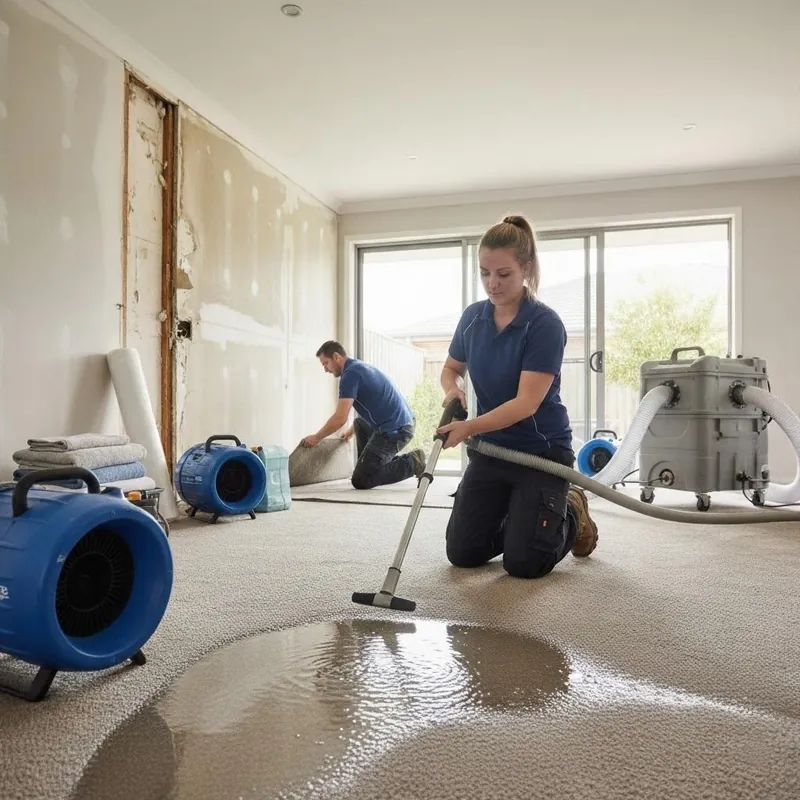
Our water removal page and structural drying page explain what that early work involves.
Ask any provider whether the job, as scoped, needs a permit, and who will pull it. Restoration teams differ in what they handle and how they work, so confirm directly and get the answer in writing with the estimate.
Does replacing drywall, insulation or framing need a permit?
The county does not list drywall in its exempt finish work, which names painting, papering, tiling, carpeting, cabinets and countertops. Replacing a small patch of drywall is often described as a minor repair, but the county has not said so in the pages used here.
Framing, structural repairs and remodels sit in a different category, since renovations are generally permitted. When a wall is opened for water damage and the studs, wiring or pipes behind it need work, the scope grows past drywall.
Ask the District Office about your specific scope before the walls are closed again. The drywall water damage repair page and the water damage repair page describe the stages of a rebuild.
Who is allowed to pull a permit?
The county says a permit can be issued only to a contractor with the appropriate license, to the property owner in certain cases or to an authorized agent of one of them. The Contractors State License Board and the Business and Professions Code set who may pull one for each trade.
The Contractors State License Board says an unlicensed person may take on projects up to $1,000, labor and materials combined, if they hire no workers and no building permits are needed. If a project under $1,000 needs workers or a permit, a license is required.
Ask any contractor for the license number, check it on the CSLB site and ask who will pull the permit. The CSLB also advises keeping the down payment to $1,000 or 10 percent of the contract price, whichever is less. See choosing a restoration company.
How does the county permit process work?
The county describes five steps: application, plan check, permit, inspection and completion. Some projects need a plan check and some do not. Once the permit is issued the work can start, and the permit holder requests inspections as the work reaches the stages the permit lists.
- Apply through EPIC-LA or at the local District Office, and pay the plan check or permit fees.
- Plan check happens when the scope requires it. Simple projects may be reviewed over the counter, and complex ones are taken in for review.
- Permit issued after any required approvals are in and fees are paid.
- Request inspections online through EPIC-LA for unincorporated areas.
- Final inspection signs off the permitted work.
Permits expire if work has not started within 12 months or lapses for more than 180 days. The county may grant 180-day extensions on written request, with an extension fee of up to 25 percent of the permit fee, and a lapsed permit means a new application.
What happens if repairs are done without a permit?
The county says work done without a required permit is illegal construction. It lists the consequences as effects on resale value, added cost to permit or demolish the work, possible denial of insurance claims, possible civil or criminal prosecution and uncertainty about the safety and quality of the work.
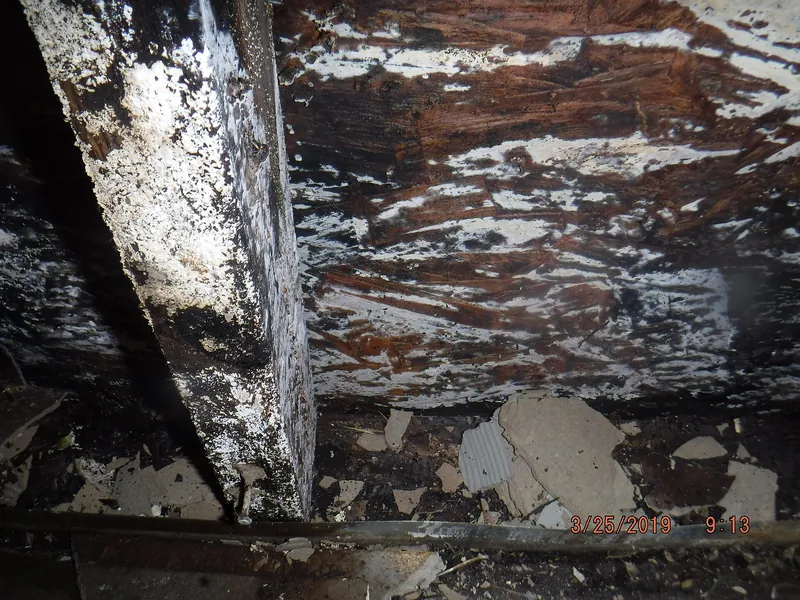

Unpermitted work also shows up at sale time, when a buyer's inspector asks for records. Our guide on disclosing past water damage explains why repair paperwork matters.
If you find that earlier work was done without a permit, do not ignore it. Ask the District Office what steps apply to your address.
Do flood hazards add rules for repairs?
They can. Los Angeles County Public Works says many properties in the county have flood hazards and are subject to building restrictions and flood resiliency requirements. Its Stormwater Engineering Division publishes a checklist and workbook for permit applications in flood hazard areas.
That matters most for larger projects, such as additions or rebuilds after a flood. The county warns that building in a flood hazard area is complex and that the design must not affect neighboring parcels. A simple interior repair is a smaller question, but ask.
The Santa Clara River's upper branches join into a broad wash near Acton, according to Wikipedia, so ask the District Office whether your parcel has a flood hazard before you plan major work. Our flooding after wildfire page covers runoff in burn areas.
How do permits fit with an insurance claim?
Insurers want to see the damage before it is repaired. Triple-I advises taking reasonable steps to protect the property but holding off major permanent repairs until the adjuster has assessed the damage. Permit paperwork then proves that approved repairs were done and inspected.
The California Department of Insurance also cautions against extensive permanent repairs before the adjuster visits and warns about contractors pushing large temporary repairs. Keep receipts for emergency steps.
Ask your adjuster whether the policy covers permit fees or code upgrades, because policies differ. Our water damage insurance claims guide lists the order of steps.
Who should I call to check whether my repair needs a permit?
Call the Los Angeles County Building and Safety District Office that serves your address, or look the project up through EPIC-LA. They can say whether your scope needs a permit. A licensed contractor or plumber can also tell you what the work requires.
Restoration teams differ in what they do, so confirm directly who will pull any permit. Browse all of our water damage guides for the pages that match your repair.
Sources: Los Angeles County Public Works, Building and Safety permits page; Los Angeles County Public Works, homeowner page; Los Angeles County Public Works, work exempt from permits; CSLB press release 24-21; CSLB home improvement contract guide; Triple-I on settling claims; CDI claims guide; Wikipedia on the Santa Clara River.