The short version
Signs of water damage in Acton, CA are spreading stains, a stale smell, blistered paint, warped boards and soft drywall. A spot that keeps changing means the leak is live. Close a valve, photograph it, then call your insurer.
What are the signs of water damage in an Acton home?
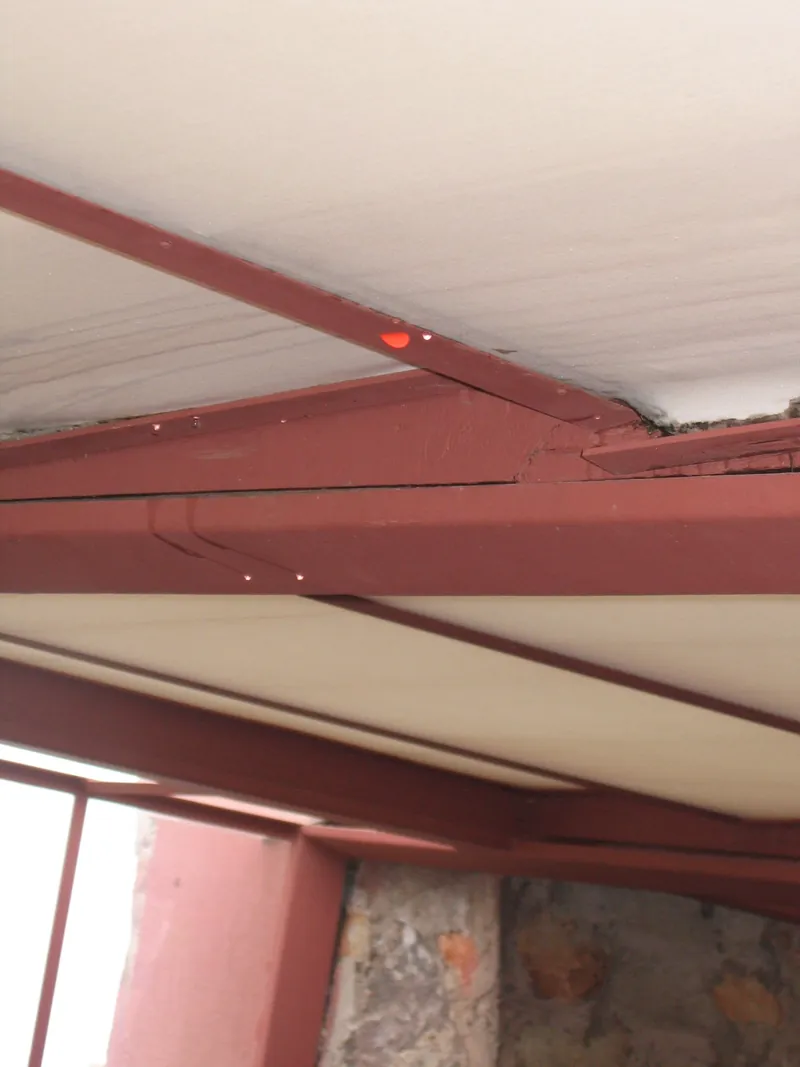
Look for a stain that keeps spreading, a musty odor, blistering paint, flooring that cups or lifts, and drywall that gives under a thumb. A lone sign can have an innocent explanation. A cluster of them, or a single mark that keeps shifting, suggests water is still on the move.
- Stains in tan, brown or gray, sometimes ringed darker where the water stopped.
- Odor reminiscent of soggy cardboard or a cellar, strongest on returning to a closed house.
- Finish changes: blisters in paint, lifting wallpaper, rust on screw heads and trim.
- Swelling: puffy baseboards, boards that buckle, a door that suddenly binds in its frame.
- Noise: a drip or a trickle somewhere while every tap and appliance is idle.
The state health department gives tenants a similar list. Its dampness and mold booklet points to moist materials, a moldy odor, and visible damage including stained surfaces, flaking paint, floors that have warped and wood that has rotted.
What does hidden water damage look like?
Hidden water damage rarely looks wet. It shows up as a small oddity: a blister far from any fixture, a cabinet floor that gives under your hand, a warm patch underfoot, or an odor you cannot place. Water inside a wall or above a ceiling can run for weeks while the surface stays quiet.
A smell with no visible source deserves a closer look, not an air freshener. The water damage smell guide covers tracing it.
Which rooms give away a leak first?
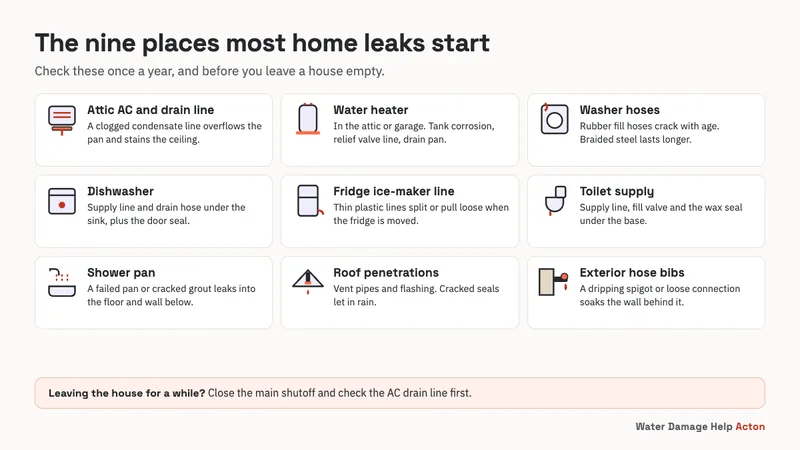
Some rooms leak more often because supply lines, drains and appliances cluster there. Find your room in the table, read across to the likely source, and have a plumber or restoration team confirm before anyone cuts into a wall. It is a starting point, not a diagnosis.
| Where | What you see | Likely source | First move |
|---|---|---|---|
| Under the kitchen sink | Swollen cabinet floor, rust on the trap, a musty smell | Supply line, drain trap, dishwasher hose | Close the fixture stop valve and empty the cabinet |
| Around the toilet or tub | Spongy flooring, split grout, a mark on the ceiling beneath | Wax ring, shower pan, tub caulk, supply connector | Stay off the fixture and shut its valve |
| Laundry area | Damp floor, crusty fittings, stained wall | Washer hose, drain box, nearby water heater | Close both washer valves and swap the hoses |
| Ceiling | Brown patch, sag, drips | Roof, a pipe above, an air handler drain | Match the timing of the stain to rain or cooling use |
| Garage or utility closet | Puddle near the water heater, rusty tank base | Tank, relief valve, connections | See the water heater leak page |
| Exterior walls and windows | Stains under a sill, peeling paint, damp trim | Failed seal or flashing | See the window leak page |
Is this stain a live leak or a dead one?
A live leak feels damp, has soft edges and keeps changing. A dead stain is dry, firm and the same size week after week. That difference separates a plumber call from a coat of primer, so check before you decide.
| Check | Active leak | Old, dry stain |
|---|---|---|
| Press with a finger | Cool, damp or spongy | Dry and solid |
| Edge | Blurry and moving outward | Sharp ring, sometimes several rings |
| Over a few days | Darker or larger | Unchanged |
| Smell | Fresh, wet odor | Faint, stale or none |
Draw around the stain with a pencil and note the date. Look again after the next storm and after a hot afternoon of cooling. A stain that stays inside the line is probably finished. One that creeps past it has a source that is still active.
What does a ceiling stain tell me?
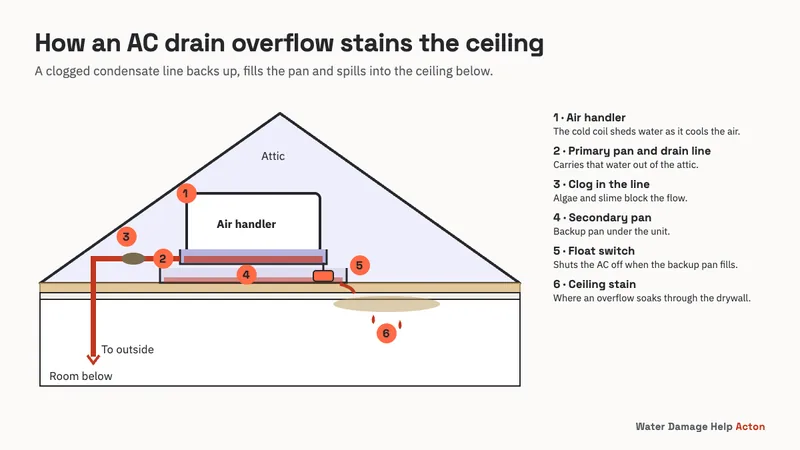
Timing tells you more than color. Growth during a storm suggests the roof. Growth when the cooling runs suggests the air handler drain. Growth regardless of weather suggests a pipe. Note which one fits before you phone anyone, because it tells the plumber or roofer where to start looking.
Weather is a useful filter in this area. Wikipedia's climate summary for Palmdale, the nearest city, gives a normal annual rainfall of 5.90 inches spread over an average of only 27 days. On the many dry days, a growing stain is less likely to be rain coming through the roof. The same article adds that Palmdale has about 52 mornings a year at or below freezing.
ENERGY STAR warns that a plugged condensate drain can damage the house and push up indoor humidity. If the stain follows the cooling system, the air conditioner leak page explains the overflow path, and a ceiling that has begun to sag is covered on the ceiling repair page.
How do I test for a leak with the water meter?
The meter settles arguments. With every fixture, appliance and sprinkler idle, any movement means water is escaping. EPA's WaterSense program describes the same check: a meter that changes while no water is being used suggests a leak. Run it before you start pulling apart cabinets or walls.
- Photograph the dial, leave the house quiet for a while, then photograph it again.
- Eliminate slow consumers first, such as a worn toilet flapper, a humidifier, a softener cycle or a sprinkler timer.
- Then close the house shutoff. A meter that stops points to a leak past the valve, inside your plumbing. A meter that keeps turning points to the supply line before it.
- Pull out recent water bills. A climb with no change in how you live is another clue.
If your property is on a well, there may be no utility meter, and a plumber may test the lines another way. The burst pipe page explains how to stop the flow once you find the source.
Could a cold snap have cracked a pipe?
Yes, and the evidence often appears as things warm up. The American Red Cross lists supply pipes in unheated spaces as the most exposed, including attics, garages, crawl spaces and kitchen cabinets. A split pipe can stay sealed by ice overnight, then drip once it thaws.
Wikipedia's summary of Palmdale gives normal daily minimums at or just below freezing from late November until late January. Acton sits in the same mountain and desert country, so a sudden wet spot after a cold night is worth taking seriously.
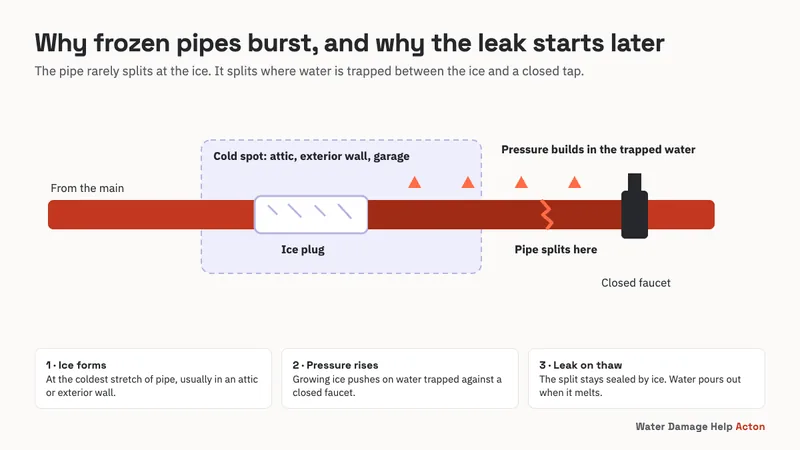
A freeze-related leak may start with a tap that runs weak or dry on a cold morning, frost on an exposed pipe, then damp insulation later. The thawing frozen pipes page covers safe warming, and the Red Cross warns never to use a blowtorch, kerosene or propane heater, or any open flame.
What if the signs show up after a storm or wildfire?
Storm and burn-area water is a different problem from a household leak. Runoff, mud and flood water can carry contamination, and insurance treats them differently. In a February 2025 release, the California Department of Insurance noted that flood, mudslide and debris flow are typically excluded, unless a recent wildfire or another covered peril is behind them.
The Santa Clara River's upper branches join into the main wash near Acton, according to Wikipedia, so runoff matters locally even in a dry climate. The flooding after wildfire page and the roof leak and storm damage page go further. Ask your insurer which category your loss falls under.
How serious is what I found?
Put each finding in one of three groups: keep an eye on it, call a plumber, or bring in a restoration team. Urgency grows with the volume of water, the time materials have stayed wet and any chance of contamination. If unsure, go up a group.
| Situation | Urgency | What to do |
|---|---|---|
| Dry stain with a sharp edge that has not changed | Watch | Outline it, recheck after rain, and repaint only when it stays dry |
| Slow drip, running toilet or a meter that moves | Plumber | Close the nearest valve and book the repair |
| Wet carpet, soft drywall, a sagging ceiling or standing water | Restoration provider soon | Stop the source, then see water removal |
| Sewage, a backed-up drain or flood water from outside | Act now, stay out | See the sewage backup page |
In the IICRC S500 standard, clean supply-line water is Category 1, while sewage and rising water from rivers or outdoor surfaces is Category 3, grossly contaminated. The higher the category, the more care the cleanup needs.
What should I do first after I find signs of water damage?
Stop the water, record the damage, then start calling. Valve first, camera second, phone third. Permanent repairs can wait for the adjuster, though taking reasonable steps to prevent more damage is expected. Do these five things in order, and keep every receipt and photo together in one folder so the claim goes smoothly.
- Close a valve, either the stop under the fixture or the main at the house. Turn off power to a soaked room only when the panel is reachable from dry ground.
- Photograph and film every mark from a few angles, with a coin or tape measure for scale.
- Carry belongings to a dry room.
- Call your insurer. Triple-I advises protecting the property from more damage, saving receipts and keeping damaged items until the adjuster visits.
- Book a plumber for the source and ask for a restoration team for whatever absorbed water.
What your policy pays depends on the cause. NAIC explains that plumbing and roof leaks are typically covered, whereas ground water, runoff and snow-melt are not. Deadlines are on the insurance claims page.
Could these signs point to mold?
Fuzzy or dark patches, or a musty odor that lingers, can mean mold. Mold needs moisture, so it often signals an unrepaired leak. EPA recommends drying soaked areas and belongings inside a 24 to 48 hour window, which prevents most growth.
EPA says a moldy patch smaller than about 10 square feet can usually be handled by the occupant. Bigger areas, patches that return after cleaning and anything tied to sewage call for a professional. The mold after water damage page explains the next steps.
The CDC lists a stuffy nose, sore throat, cough and wheezing among mold effects, with stronger reactions for people who have asthma or a mold allergy. For help drying out, the contact page can connect you with a restoration team near Acton.
Sources: CDPH, Dampness and Mold for Renters; EPA, A Brief Guide to Mold, Moisture and Your Home; EPA WaterSense, Fix a Leak Week; ENERGY STAR, Maintenance Checklist; American Red Cross, Frozen Pipes; California Department of Insurance, February 4, 2025 release; IICRC, S500 standard; Triple-I, Settling insurance claims; NAIC, Homeowners Insurance; CDC, About Mold and Your Health; Wikipedia, Palmdale, California; Wikipedia, Santa Clara River